NC
Midwood Addiction Treatment
Matthews, NC
Substance Abuse/Mental Health · Family Oriented Program · Dual Diagnosis
Accepts: Insurance/Private Pay

Find a free or private addiction rehab center in North Carolina. Use our search-by-city tool to find recovery near you.
Matthews, NC
Substance Abuse/Mental Health · Family Oriented Program · Dual Diagnosis
Accepts: Insurance/Private Pay
Asheville, NC
Addiction Treatment · Addiction Is A Multifaceted Challenge Affecting Not Just The Body But Also The Mind And Soul. At Ritual Recovery, We Recognize The Intricate Web Of Factors That Contribute To Addiction, Including Genetic, Environmental, And Psychological Elements. Our Asheville Addiction Treatment Programs Are Designed To Unravel These Complexities, Offering A Comprehensive Approach That Considers Every Aspect Of An Individual’s Life. · Dual Diagnosis Treatment
Accepts: Cash Pay And Private Insurance
Concord, NC
Holistic & Evidence Based Recovery Center For Drug & Alcohol Addiction · Trauma Informed Therapy, Cognitive Behavioral Therapy (Cbt), Individual & Group Therapy, Motivational Interviewing, Solution Focused Brief Therapy, Experiential Therapy
Accepts: We Work With Many Major Insurance Companies And Also Offer Personal Payment Options.
561 centers found (521–540)
Dunn, NC
Substance use treatment · Does not use medication for opioid addiction · Cognitive behavioral therapy
Accepts: Cash or self-payment

Jackson, NC
Substance use treatment · Does not treat opioid addiction · Cognitive behavioral therapy
Accepts: Cash or self-payment, Medicaid, Medicare
High Point, NC
Substance use treatment · Accepts clients on opioid medication but prescribed elsewhere · Cognitive behavioral therapy
Accepts: Cash or self-payment, Medicaid, State-financed health insurance plan other than Medicaid
Camp Lejeune, NC
Substance use treatment · Does not treat opioid addiction · Cognitive behavioral therapy
Accepts: Active duty military, Military families
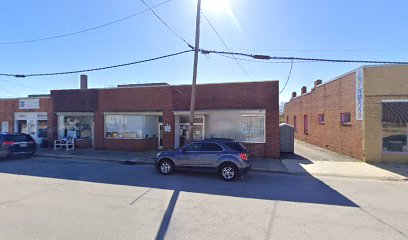
Kenansville, NC
Substance use treatment · Accepts clients on opioid medication but prescribed elsewhere · Cognitive behavioral therapy
Accepts: Cash or self-payment
Statesville, NC
Substance use treatment · Accepts clients on opioid medication but prescribed elsewhere · Cognitive behavioral therapy
Accepts: Cash or self-payment, Private health insurance
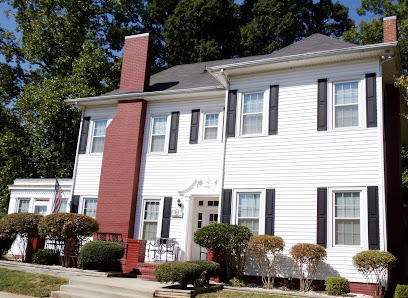
Gastonia, NC
Substance use treatment · Does not treat opioid addiction · Substance abuse counseling
Accepts: Cash or self-payment, State-financed health insurance plan other than Medicaid
Raleigh, NC
Substance use treatment · Does not treat opioid addiction · Cognitive behavioral therapy
Accepts: Cash or self-payment

Charlotte, NC
Substance use treatment · Accepts clients on opioid medication but prescribed elsewhere · Substance abuse counseling
Accepts: Cash or self-payment, State-financed health insurance plan other than Medicaid

Pilot Mountain, NC
Substance use treatment · Does not use medication for opioid addiction · Cognitive behavioral therapy
Accepts: Cash or self-payment, State-financed health insurance plan other than Medicaid
Morehead City, NC
Substance use treatment · Does not treat opioid addiction · Cognitive behavioral therapy
Accepts: Cash or self-payment
Fayetteville, NC
Substance use treatment · Substance abuse counseling · Smoking permitted without restriction
Accepts: Cash or self-payment, Medicaid, Medicare
Supply, NC
Substance use treatment · Substance abuse counseling · Smoking not permitted
Accepts: Cash or self-payment
Lenoir, NC
Substance use treatment · Does not use medication for opioid addiction · Cognitive behavioral therapy
Accepts: Cash or self-payment, Payment assistance
Greenville, NC
Substance use treatment · Accepts clients on opioid medication but prescribed elsewhere · Cognitive behavioral therapy
Accepts: Cash or self-payment, Medicaid, State-financed health insurance plan other than Medicaid
Kernersville, NC
Substance use treatment · Does not treat opioid addiction · Cognitive behavioral therapy
Accepts: Cash or self-payment, Payment assistance
Concord, NC
Substance use treatment · Accepts clients on opioid medication but prescribed elsewhere · Substance abuse counseling
Accepts: Cash or self-payment, State-financed health insurance plan other than Medicaid
Durham, NC
Substance use treatment · Does not treat opioid addiction · Cognitive behavioral therapy
Accepts: Cash or self-payment
Smithfield, NC
Substance use treatment · Accepts clients on opioid medication but prescribed elsewhere · Cognitive behavioral therapy
Accepts: Cash or self-payment
Concord, NC
Substance use treatment · Accepts clients on opioid medication but prescribed elsewhere · Cognitive behavioral therapy
Accepts: Cash or self-payment
Our sponsored hotline can help you compare treatment options and next steps.
North Carolina's treatment picture is shaped as much by its geography as its policy. The state runs from the Appalachian counties around Asheville, where the nearest inpatient bed can sit an hour away over mountain roads, to the dense Piedmont core — Charlotte, Greensboro, Durham, and the Raleigh Research Triangle — where most of the 561 centers listed here cluster. That divide is not academic: a family in a rural western county faces a very different set of choices than someone in Mecklenburg County with a dozen programs within a short drive. The eastern and coastal parts of the state, including Wilmington, absorbed some of the country's heaviest prescription-opioid and heroin impact, and that history still shapes local demand. North Carolina also expanded Medicaid coverage (effective December 1, 2023), changing who can realistically pay for care, and it has leaned on harm-reduction measures such as a 911 Good Samaritan overdose law and wider naloxone access through a statewide standing order (NCDHHS). So rehab in North Carolina is not one single thing. It might mean a coastal outpatient clinic or a mountain residential program, and the right starting point depends heavily on where you are and what you can actually reach.
Sober Nation lists 561 treatment centers across North Carolina, and where they sit tracks the state's population map closely. Charlotte leads with 36 listed centers, followed by Greensboro (29), Durham (26), and Raleigh (26). The next tier includes Fayetteville (25) — whose count also reflects treatment needs around Fort Liberty and the surrounding military and veteran community — alongside the two ends of the state, coastal Wilmington (23) and mountain Asheville (23). Greenville (17), Winston Salem (16), and Lumberton (13) round out the busiest markets, a useful reminder that meaningful capacity exists outside the four biggest metros.
Statewide prevalence and unmet need are harder to see from a directory alone. An estimated 15.3% of North Carolina residents aged 12 or older — roughly 1.4 million people — met criteria for a substance use disorder in the past year (SAMHSA NSDUH, 2022–2023), and about 77% of those classified as needing substance use treatment did not receive it (SAMHSA NSDUH, 2022–2023) — the treatment gap that drives much of the demand behind these listings. Drug overdose deaths, driven overwhelmingly by illegally made fentanyl, climbed sharply through the late 2010s and early 2020s before beginning to ease in 2023 and 2024; more than 44,500 North Carolinians have died from a drug overdose since 2000, and the state still lost roughly eight people a day to overdose in 2024 (NCDHHS). Keep the distinction in mind: the number of centers tells you what exists near you, not yet whether any single program fits your diagnosis, budget, or schedule. The sections that follow break down what these programs actually provide.
The mix of what's on offer shapes where you can realistically begin. Outpatient care is by far the most common — 89% of listed North Carolina centers provide it — meaning you live at home and attend scheduled sessions. It suits people with stable housing, a supportive environment, and lower-acuity needs, and it ranges from a weekly group to an intensive day program. Between the extremes sit intensive outpatient and partial hospitalization programs, and a growing number of centers deliver services by telehealth — a meaningful option for the rural and mountain counties where in-person capacity is thin. Medication-assisted treatment (MAT), offered by 53% of centers, pairs FDA-approved medications like buprenorphine, methadone, or naltrexone with counseling; for opioid use disorder it is considered a clinical standard, not a shortcut. Aftercare, available at 79%, covers the ongoing support that follows an intensive phase — the piece that often decides whether early gains hold.
Higher-intensity care is scarcer, which matters if dependence is severe. Detox, at 21%, provides medically supervised withdrawal and is frequently the necessary first step before other treatment can begin safely. Residential or inpatient programs — 14% of listed centers — mean living on-site, often the safest option for someone who lacks a stable, substance-free home. Many people move through several of these levels in sequence rather than choosing just one.
How you'll pay often narrows the list faster than clinical fit does. Among North Carolina's listed centers, 75% accept Medicaid and 51% accept Medicare — a broad base of public-coverage acceptance relative to many states. That base matters because North Carolina expanded Medicaid eligibility on December 1, 2023 (NCDHHS), extending coverage to low-income adults ages 19–64 who previously fell into a gap between traditional Medicaid and marketplace subsidies; more than 690,000 residents had gained coverage within the expansion's first two years. If you gained coverage through that change, a large share of listed programs are already within reach.
For people with private insurance, the federal Mental Health Parity and Addiction Equity Act (MHPAEA) generally requires most plans that cover substance use treatment to do so on terms no more restrictive than other medical care (CMS), though what any specific policy actually pays still varies by plan and provider network. If you are uninsured or underinsured, North Carolina also funds treatment for eligible residents through its public behavioral health system — coordinated by the state's Division of Mental Health, Developmental Disabilities and Substance Use Services and delivered through regional LME/MCOs (NCDHHS) — and some private centers offer sliding-scale fees, payment plans, or scholarships. It also helps to ask whether a center will run a clinical assessment first, since the recommended level of care — and therefore the price — should follow your diagnosis rather than a default package. Before you commit anywhere, get in writing what your plan covers, what it excludes, and what you will owe out of pocket. The real cost is rarely the advertised sticker price, and asking early prevents an ugly surprise later.
A few state and national resources can help you verify options and reach support directly:
If you are unsure where to begin, the state authority can also point you toward the local access point that serves your county and to publicly funded providers nearby. Use these to cross-check any center you are considering and to reach a real person when a situation feels urgent. You are your own best advocate here: ask questions, request a tour, and call for guidance before you decide anything.