

Philio Inc DBA New Concepts
Toledo, OH
- Detox
- PHP
- IOP
- MAT
Substance use treatment · Cognitive behavioral therapy · Dialectical behavior therapy
Accepts: Cash or self-payment, Medicaid, Medicare

Find a free or private addiction rehab center in Ohio. Use our search-by-city tool to find recovery near you.
479 centers found (1–20)
Toledo, OH
Substance use treatment · Cognitive behavioral therapy · Dialectical behavior therapy
Accepts: Cash or self-payment, Medicaid, Medicare

Athens, OH
Substance use treatment · Accepts clients on opioid medication but prescribed elsewhere · SAMHSA-certified Opioid Treatment Program
Accepts: Cash or self-payment, Medicaid, Medicare

Cincinnati, OH
Substance use treatment · SAMHSA-certified Opioid Treatment Program · Cognitive behavioral therapy
Accepts: Cash or self-payment, Medicaid, Medicare

Dayton, OH
Substance use treatment · SAMHSA-certified Opioid Treatment Program · Cognitive behavioral therapy
Accepts: Cash or self-payment, Medicaid, Medicare
Athens, OH
Substance use treatment · Accepts clients on opioid medication but prescribed elsewhere · SAMHSA-certified Opioid Treatment Program
Accepts: Cash or self-payment, Medicaid, Medicare
Jackson, OH
Substance use treatment · Accepts clients on opioid medication but prescribed elsewhere · SAMHSA-certified Opioid Treatment Program
Accepts: Cash or self-payment, Medicaid, Medicare
Gallipolis, OH
Substance use treatment · Accepts clients on opioid medication but prescribed elsewhere · Cognitive behavioral therapy
Accepts: Cash or self-payment, Medicaid, Medicare

Pomeroy, OH
Substance use treatment · Accepts clients on opioid medication but prescribed elsewhere · Cognitive behavioral therapy
Accepts: Cash or self-payment, Medicaid, Medicare

Albany, OH
Substance use treatment · Accepts clients on opioid medication but prescribed elsewhere · Cognitive behavioral therapy
Accepts: Cash or self-payment, Medicaid, Medicare
Athens, OH
Substance use treatment · Accepts clients on opioid medication but prescribed elsewhere · Cognitive behavioral therapy
Accepts: Cash or self-payment, Medicaid, Medicare

Columbus, OH
Substance use treatment · Accepts clients on opioid medication but prescribed elsewhere · Cognitive behavioral therapy
Accepts: Cash or self-payment, Medicare, State-financed health insurance plan other than Medicaid

Cincinnati, OH
Substance use treatment · SAMHSA-certified Opioid Treatment Program · Cognitive behavioral therapy
Accepts: Cash or self-payment, Medicaid, State-financed health insurance plan other than Medicaid

Columbus, OH
Substance use treatment · Cognitive behavioral therapy · Dialectical behavior therapy
Accepts: Cash or self-payment, Medicaid, Private health insurance

Logan, OH
Substance use treatment · Accepts clients on opioid medication but prescribed elsewhere · Cognitive behavioral therapy
Accepts: Cash or self-payment, Medicaid, Medicare
Mc Arthur, OH
Substance use treatment · Accepts clients on opioid medication but prescribed elsewhere · Cognitive behavioral therapy
Accepts: Cash or self-payment, Medicaid, Medicare
Cleveland, OH
Substance use treatment · SAMHSA-certified Opioid Treatment Program · Cognitive behavioral therapy
Accepts: Cash or self-payment, Medicaid, Medicare

Cleveland, OH
Substance use treatment · Accepts clients on opioid medication but prescribed elsewhere · All Clients in Opioid Treatment Program
Accepts: Payment assistance

Dayton, OH
Substance use treatment · Cognitive behavioral therapy · Dialectical behavior therapy
Accepts: Cash or self-payment, Medicaid, Medicare
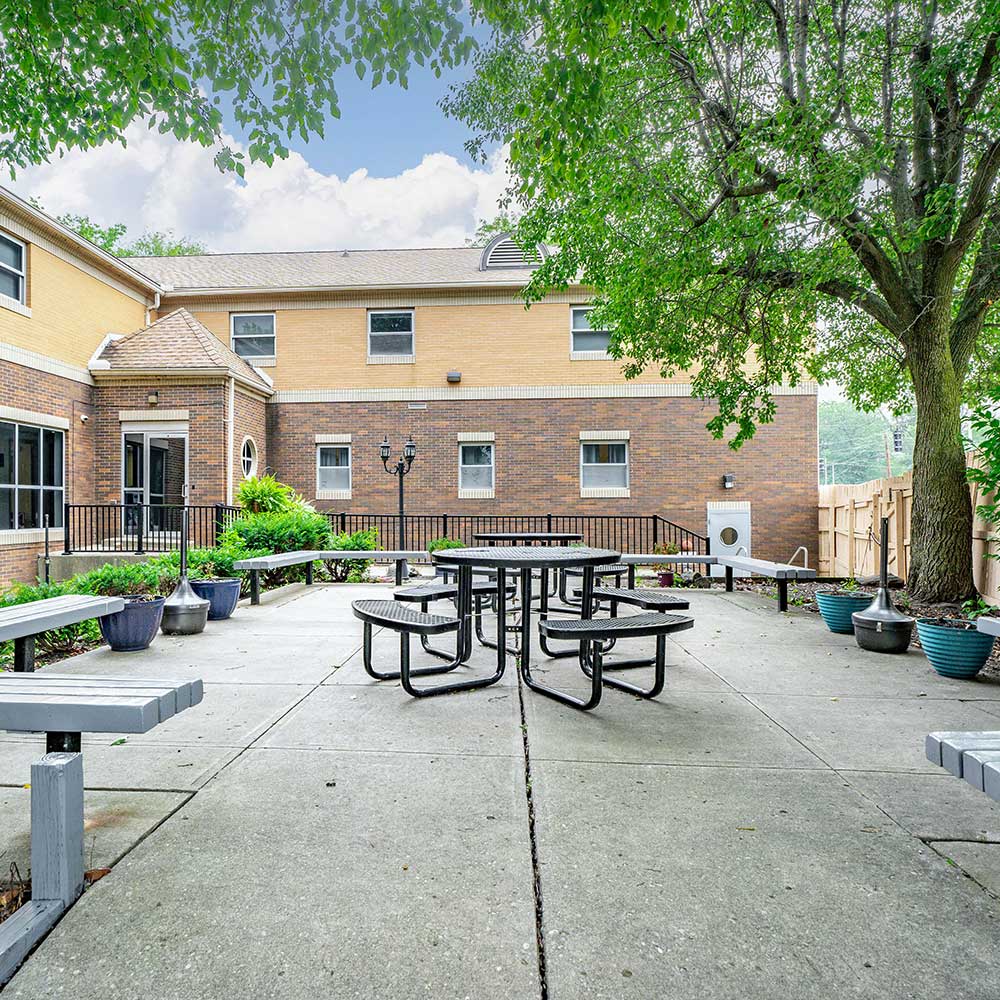
Fairfield, OH
Substance use treatment · SAMHSA-certified Opioid Treatment Program · Cognitive behavioral therapy
Accepts: Cash or self-payment, Medicaid, Medicare
Xenia, OH
Substance use treatment · SAMHSA-certified Opioid Treatment Program · Cognitive behavioral therapy
Accepts: Cash or self-payment, Medicaid, Medicare
Our sponsored hotline can help you compare treatment options and next steps.
Ohio sits at the center of the American opioid and fentanyl crisis, and its treatment system has been built and rebuilt under that pressure for more than a decade. Recovery here does not look the same in every county. The "3-C" corridor — Columbus, Cleveland, and Cincinnati — concentrates most of the state's residential beds, hospital-affiliated programs, and specialty tracks, while the Appalachian counties of the southeast — where several counties, led by Scioto County at 117.9 deaths per 100,000, have posted the state's highest unintentional drug-overdose death rates (Ohio Department of Health, 2023) — can mean an hour or more of driving to reach the nearest facility.
Ohio expanded Medicaid in 2014 under the Affordable Care Act (KFF), a decision that reshaped who could afford care and helped push medication-assisted treatment into smaller communities, and the state also supports one of the country's more established naloxone-distribution and harm-reduction frameworks through Project DAWN, a statewide network of free-naloxone sites reaching most of Ohio's 88 counties (Ohio Department of Health). Those investments matter because Ohio's hardest-hit areas — old manufacturing towns and isolated Appalachian communities alike — are often the same places where steady work, reliable transportation, and stable housing are hardest to come by. Whether you are researching for yourself or a family member, knowing which of those two Ohios you live in usually matters more than any brochure. Both realities are true at once, and the right first move depends on where you sit.
Sober Nation lists 479 treatment centers across Ohio, and their distribution closely tracks where people actually live. Columbus has the most listed programs at 40, followed by Cleveland at 37 and Cincinnati at 27 — the three metros that anchor the state's population. Akron (20) and Toledo (16) form a clear second tier, with Dayton and Youngstown each at 15, Canton at 12, Hamilton at 8, and Chillicothe at 7. Those 479 listings span everything from hospital detox units to standalone outpatient clinics, so two centers in the same city can offer very different levels of care. If your first-choice city has only a handful of listings, widening the search to the nearest larger metro — or asking a local program about its referral partners — often surfaces options a single-city search misses.
The picture behind those listings is heavier. An estimated 1.8 million Ohioans aged 12 and older — about 18% of that age group — met criteria for a substance use disorder in the past year (SAMHSA NSDUH, 2022–2023), and the share who receive any care — the so-called treatment gap — stays wide: of the roughly 2.1 million Ohioans classified as needing substance use treatment, only about one in four received any (SAMHSA NSDUH, 2022–2023). Ohio's drug overdose death rate, meanwhile, continues to sit above the national rate — 27.2 deaths per 100,000 versus 23.1 nationally (KFF analysis of CDC data, 2024). Read together, the listings and the need behind them explain why waitlists in one part of the state can sit next to open appointments in another. Those realities are why the count and placement of the 479 listed centers is worth studying before you commit to one.
Where you start depends on how severe withdrawal is likely to be and how much daily structure you need. Detox — medically supervised withdrawal — is offered by 30% of Ohio's listed centers, and it is the safest entry point when stopping alcohol, opioids, or benzodiazepines could trigger dangerous symptoms. Detox alone is not treatment, though; without a plan to move into ongoing care, the risk of returning to use — and of overdose after a period of lowered tolerance — climbs sharply. Residential care, where you live on-site around the clock, is available at 22% and is the most intensive step, meant for people who need distance from the environment tied to their use. Outpatient programs are by far the most common, offered by 90% of listed centers, and they let you keep working or caring for family while attending treatment several times a week. Medication-assisted treatment (MAT) — buprenorphine, methadone, or naltrexone combined with counseling — is available at 55%, a meaningful share given how much of Ohio's crisis is opioid-driven. Aftercare, the support that holds recovery together after a formal program ends, is offered by 89%. If you are unsure where you belong, a licensed program can complete an assessment and recommend a starting level; most people step down from more to less intensive care over time rather than choosing just one.
Cost is usually the first question, and in Ohio the answer often begins with Medicaid. 95% of the state's listed centers accept it — an unusually high share that reflects Ohio's decision to expand the program under the Affordable Care Act in 2014 (KFF). If you qualify, that coverage can make treatment effectively free at the point of care, including many MAT and outpatient services. Medicare is accepted at 58% of listed centers, which matters for older adults and some people who qualify through disability. Private insurance is another common route; the federal Mental Health Parity and Addiction Equity Act requires most health plans that cover mental health and substance use care to do so on terms comparable to other medical and surgical care (U.S. Department of Labor). For people who are uninsured or underinsured, Ohio also channels federal block-grant and state dollars through its county behavioral health (ADAMH) boards to community programs, many of which offer sliding-scale or reduced-cost care (OhioMHAS). Keep in mind that being accepted by a center and being covered for a specific service are not the same thing, so ask about copays, prior authorization, and any length-of-stay limits before you commit — not just whether your insurance is taken. And do not let an unclear bill stop you from making the first call; many Ohio programs have staff whose job is to sort out coverage, connect you with charity care, or point you to a lower-cost option that fits your situation.
A few Ohio-specific starting points can save you time:
Whichever you contact first, keep a short list of questions ready so each call moves you toward a specific next step.