Firefly Addiction and Family Therapy
Sandy, UT
- IOP
Substance use treatment · Accepts clients on opioid medication but prescribed elsewhere · Cognitive behavioral therapy
Accepts: Cash or self-payment, Private health insurance, Sliding fee scale


Find a free or private addiction rehab center in Utah. Use our search-by-city tool to find recovery near you.
306 centers found (281–300)
Sandy, UT
Substance use treatment · Accepts clients on opioid medication but prescribed elsewhere · Cognitive behavioral therapy
Accepts: Cash or self-payment, Private health insurance, Sliding fee scale
Ogden, UT
Substance use treatment · Does not treat opioid addiction · Cognitive behavioral therapy
Accepts: Cash or self-payment, Medicaid, Private health insurance
Ogden, UT
Substance use treatment · Does not use medication for opioid addiction · Cognitive behavioral therapy
Accepts: Cash or self-payment, Sliding fee scale
Midvale, UT
Substance use treatment · Accepts clients on opioid medication but prescribed elsewhere · Cognitive behavioral therapy
Accepts: Cash or self-payment, Private health insurance
Salt Lake City, UT
Substance use treatment · Accepts clients on opioid medication but prescribed elsewhere · Cognitive behavioral therapy
Accepts: Cash or self-payment, Medicare, Private health insurance
Salt Lake City, UT
Substance use treatment · Does not treat opioid addiction · Cognitive behavioral therapy
Accepts: Cash or self-payment, Medicaid, Medicare

Hurricane, UT
Smoking permitted in designated area · State Substance Abuse agency · The Joint Commission
Accepts: Cash or self-payment, Private health insurance
West Valley City, UT
Substance use treatment · Does not treat opioid addiction · Cognitive behavioral therapy
Accepts: Cash or self-payment, Medicaid, Private health insurance
Brigham City, UT
Substance use treatment · Does not treat opioid addiction · Cognitive behavioral therapy
Accepts: Cash or self-payment, Private health insurance

Pleasant Grove, UT
Smoking permitted in designated area · Hospital inpatient · State department of health
Accepts: Cash or self-payment, Private health insurance

Sandy, UT
Substance use treatment · Accepts clients on opioid medication but prescribed elsewhere · Cognitive behavioral therapy
Accepts: Cash or self-payment, Medicaid, Private health insurance
Brigham City, UT
Substance use treatment · Does not treat opioid addiction · Cognitive behavioral therapy
Accepts: Cash or self-payment, Private health insurance
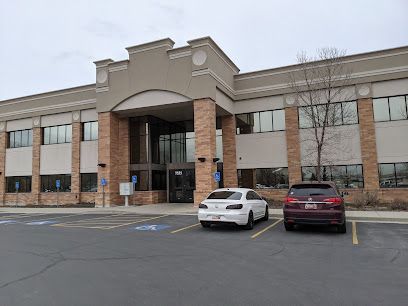
West Jordan, UT
Substance use treatment · Smoking not permitted · Hospital inpatient
Accepts: Cash or self-payment, Medicaid, Medicare
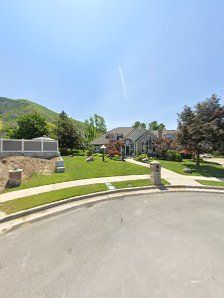
Draper, UT
Accepts clients on opioid medication but prescribed elsewhere · Substance abuse counseling · Smoking permitted in designated area
Accepts: Cash or self-payment, Private health insurance, Military insurance
Saint George, UT
Substance use treatment · Does not use medication for opioid addiction · Accepts clients on opioid medication but prescribed elsewhere
Accepts: Cash or self-payment
Sandy, UT
Substance use treatment · Does not use medication for opioid addiction · Cognitive behavioral therapy
Accepts: Cash or self-payment, Private health insurance
Ogden, UT
Substance use treatment · Accepts clients on opioid medication but prescribed elsewhere · Cognitive behavioral therapy
Accepts: Cash or self-payment, Medicaid, Private health insurance
Orem, UT
Substance use treatment · Accepts clients on opioid medication but prescribed elsewhere · Cognitive behavioral therapy
Accepts: Cash or self-payment, Medicaid, Private health insurance
Ogden, UT
Substance use treatment · Accepts clients on opioid medication but prescribed elsewhere · Cognitive behavioral therapy
Accepts: Cash or self-payment, Sliding fee scale
Clearfield, UT
Substance use treatment · Accepts clients on opioid medication but prescribed elsewhere · Cognitive behavioral therapy
Accepts: Cash or self-payment, Sliding fee scale
Our sponsored hotline can help you compare treatment options and next steps.
Utah's recovery culture is shaped by forces you won't find in most other states. A large share of Utahns belong to the Church of Jesus Christ of Latter-day Saints, whose teachings discourage alcohol and drug use — a backdrop that can make admitting a substance use problem feel especially isolating, even as it fuels unusually strong family and congregational support once someone reaches out. Utah also spent years among the states hardest hit by prescription opioids, and although fentanyl and methamphetamine now drive most overdose deaths, that pill-driven history still shapes how many local families first arrive at treatment (Utah Department of Health and Human Services).
Access here is partly a geography problem: most licensed centers cluster along the Wasatch Front — Salt Lake City, Ogden, Provo — while rural counties and tribal communities across the state's south and east can sit hours from the nearest residential bed. Utah voters also expanded Medicaid through a 2018 ballot measure (Proposition 3), with full expansion for low-income adults taking effect in January 2020 (KFF), widening the door to publicly funded care. If you or a loved one is weighing options, understanding how Utah's system actually works is a practical first step toward getting the right help.
Sober Nation lists 306 treatment centers across Utah, and where they sit says a lot about access in the state. Salt Lake City alone accounts for 80 of them, followed by Sandy and Orem with 18 each, Ogden with 16, and Saint George and Provo with 13 apiece. Draper (9), Midvale, West Jordan, and Clearfield (7 each) round out the busiest cities — a footprint heavily weighted toward the Wasatch Front corridor and its suburbs, with far fewer options in the rural south and east.
The range of services is broad. Ninety percent of listed centers offer aftercare, 78% provide outpatient programs, and 58% offer medication-assisted treatment (MAT), while 32% run residential programs and 29% provide medically supervised detox. On the payment side, 65% accept Medicaid and 32% accept Medicare — a meaningful cushion for families relying on public coverage.
Statewide, the need is significant. An estimated 12.8% of Utahns aged 12 or older — roughly 1 in 8 — met the criteria for a substance use disorder in the past year (2022–2023 NSDUH, SAMHSA). The treatment gap is wide: nearly 70% of Utahns classified as needing substance use treatment did not receive it (2022–2023 NSDUH, SAMHSA). Overdose deaths, now driven mainly by opioids in the form of fentanyl, continue to shape demand — Utah recorded 606 drug overdose deaths in 2023, up 14.3% from the prior year and the most on record, with fentanyl involved in 47.9% of them (Utah Department of Health and Human Services).
Choosing where to start depends on how severe the substance use is and whether it's medically safe to stop on your own. Detox, offered by 29% of Utah's listed centers, provides medically supervised withdrawal — the right entry point when the body is physically dependent on alcohol, opioids, or benzodiazepines, where stopping abruptly can be dangerous. Residential care, available at 32% of centers, means living on-site for structured, round-the-clock treatment, often directly after detox. Outpatient programs — the most common option, at 78% of centers — let you live at home while attending scheduled sessions, a fit for milder cases or as a step down from residential care.
Medication-assisted treatment, offered by 58%, pairs FDA-approved medications such as buprenorphine or naltrexone with counseling and is considered a standard of care for opioid use disorder. Aftercare, listed by 90% of centers, covers the ongoing support — alumni groups, check-ins, relapse-prevention planning — that keeps recovery stable long after a program ends. Most people move through several of these levels over time rather than choosing just one, so it helps to ask each facility how they handle the transitions between them.
Cost is the most common reason people delay treatment, but in Utah more options exist than many families expect. Among listed centers, 65% accept Medicaid and 32% accept Medicare, meaning the majority of facilities work with public insurance rather than private pay alone. Utah's voter-approved Medicaid expansion (Proposition 3, 2018), fully in effect since January 2020, broadened eligibility for low-income adults, which can open treatment to people who previously earned too much for traditional Medicaid but couldn't afford private care (KFF).
Federal parity law — the Mental Health Parity and Addiction Equity Act — generally requires health plans that cover mental health and substance use care to do so no more restrictively than other medical care (CMS), though what your specific plan actually pays for still varies widely. For the uninsured, Utah's state substance use authority — the Office of Substance Use and Mental Health — funds a network of publicly supported programs through county and local providers, and many centers offer sliding-scale fees or payment plans (Utah Office of Substance Use and Mental Health). Before you enroll anywhere, verify your benefits directly with your insurer or Medicaid, and ask each facility exactly what it accepts — coverage details change often and are worth confirming in writing.
Several public and nonprofit organizations can help you find care and understand your options in Utah. The state's Single State Agency for substance use services — Utah's Office of Substance Use and Mental Health, housed within the Department of Health and Human Services — oversees publicly funded treatment and prevention and maintains the county-by-county local authority contacts that route many people to care (sumh.utah.gov). NAMI Utah, the state chapter of the National Alliance on Mental Illness, offers free education, family support groups, and a help line that's especially useful when substance use overlaps with a mental health condition (namiut.org).
And if you or someone you love is in immediate crisis, the 988 Suicide & Crisis Lifeline connects you with trained counselors around the clock, by call or text, at no cost (988lifeline.org). When you're not sure where to begin, these are three reliable first calls — and none of them require you to have all the answers before you reach out.