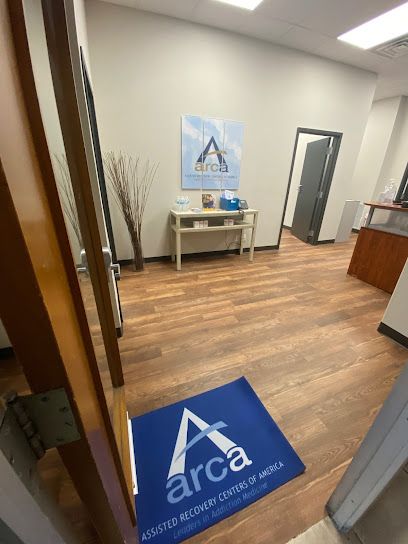
Assisted Recovery Centers of America
Saint Louis, MO
- Detox
- Outpatient
- MAT
- Sober Living
Substance use treatment · Cognitive behavioral therapy · Substance abuse counseling
Accepts: Cash or self-payment, Medicaid, Medicare


Find a free or private addiction rehab center in Missouri. Use our search-by-city tool to find recovery near you.
272 centers found (61–80)
Saint Louis, MO
Substance use treatment · Cognitive behavioral therapy · Substance abuse counseling
Accepts: Cash or self-payment, Medicaid, Medicare

Cape Girardeau, MO
Substance use treatment · Accepts clients on opioid medication but prescribed elsewhere · Cognitive behavioral therapy
Accepts: Cash or self-payment, Medicaid, Medicare
Owensville, MO
Substance use treatment · Accepts clients on opioid medication but prescribed elsewhere · Cognitive behavioral therapy
Accepts: Cash or self-payment, Medicaid, Medicare
El Dorado Springs, MO
Substance use treatment · Accepts clients on opioid medication but prescribed elsewhere · Cognitive behavioral therapy
Accepts: Cash or self-payment, Medicaid, Medicare
Warrensburg, MO
Substance use treatment · Accepts clients on opioid medication but prescribed elsewhere · Cognitive behavioral therapy
Accepts: Cash or self-payment, Medicaid, Medicare
Warsaw, MO
Substance use treatment · Accepts clients on opioid medication but prescribed elsewhere · Cognitive behavioral therapy
Accepts: Cash or self-payment, Medicaid, Medicare
Rolla, MO
Substance use treatment · Accepts clients on opioid medication but prescribed elsewhere · Cognitive behavioral therapy
Accepts: Cash or self-payment, Medicaid, Medicare

Fredericktown, MO
Substance use treatment · Accepts clients on opioid medication but prescribed elsewhere · Cognitive behavioral therapy
Accepts: Cash or self-payment, Medicaid, Medicare
Lebanon, MO
Substance use treatment · Accepts clients on opioid medication but prescribed elsewhere · Cognitive behavioral therapy
Accepts: Cash or self-payment, Medicaid, Medicare
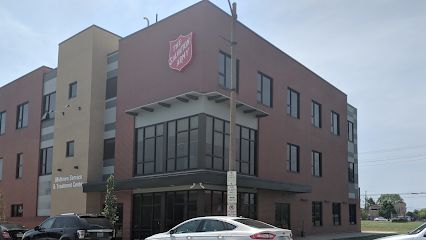
Saint Louis, MO
Substance use treatment · Accepts clients on opioid medication but prescribed elsewhere · Cognitive behavioral therapy
Accepts: Cash or self-payment, Medicaid, Medicare
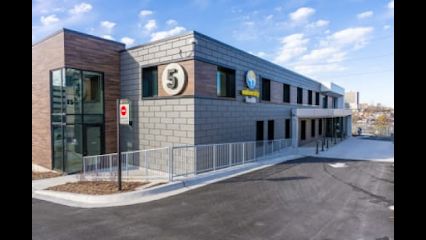
Kansas City, MO
Substance use treatment · Cognitive behavioral therapy · Dialectical behavior therapy
Accepts: Cash or self-payment, Medicaid, Medicare

Saint Peters, MO
Substance use treatment · Cognitive behavioral therapy · Dialectical behavior therapy
Accepts: Cash or self-payment, Medicaid, State-financed health insurance plan other than Medicaid
Nevada, MO
Substance use treatment · Accepts clients on opioid medication but prescribed elsewhere · Cognitive behavioral therapy
Accepts: Cash or self-payment, Medicaid, Medicare

Osceola, MO
Substance use treatment · Accepts clients on opioid medication but prescribed elsewhere · Cognitive behavioral therapy
Accepts: Cash or self-payment, Medicaid, Medicare

Maryville, MO
Substance use treatment · Cognitive behavioral therapy · Dialectical behavior therapy
Accepts: Cash or self-payment, Medicaid, Medicare
Maryville, MO
Substance use treatment · Accepts clients on opioid medication but prescribed elsewhere · Cognitive behavioral therapy
Accepts: Cash or self-payment, Medicaid, Medicare

Windsor, MO
Substance use treatment · Does not use medication for opioid addiction · Cognitive behavioral therapy
Accepts: Cash or self-payment, Medicaid, Medicare
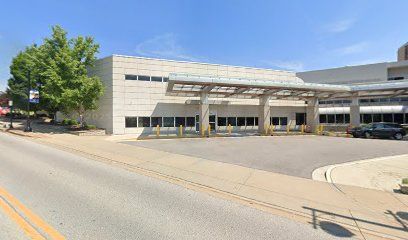
Saint Charles, MO
Substance use treatment · Cognitive behavioral therapy · Dialectical behavior therapy
Accepts: Cash or self-payment, Medicare, Private health insurance
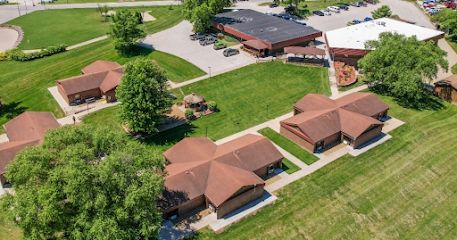
Boonville, MO
Substance use treatment · Cognitive behavioral therapy · Substance abuse counseling
Accepts: Cash or self-payment, Private health insurance, Military insurance
Clinton, MO
Substance use treatment · Accepts clients on opioid medication but prescribed elsewhere · Cognitive behavioral therapy
Accepts: Cash or self-payment, Medicaid, Medicare
Our sponsored hotline can help you compare treatment options and next steps.
Missouri sits at a genuine crossroads for addiction care. Its two largest treatment hubs — Kansas City on the western edge of the state and St. Louis on the eastern — anchor opposite corners, leaving the rural Ozarks in the south-central highlands and the Bootheel in the far southeast stretched thin in between. That geography shapes how residents reach help: a family in Cape Girardeau or Poplar Bluff typically passes far fewer options on the way to a program than one in a metro, and a long drive can quietly decide whether someone starts treatment at all.
Missouri also carries a distinct policy history. For years it was the only state in the country without a statewide prescription drug monitoring program, relying on a patchwork of county systems before finally launching a statewide database in December 2023 — the last state in the nation to do so. And after voters approved Medicaid expansion at the ballot box in 2020, with coverage taking effect in 2021, eligibility widened for low-income adults who previously had no coverage for treatment at all. These local realities matter when you or a loved one is deciding where, and how, to begin — because in Missouri, access often depends as much on your ZIP code as on your diagnosis.
Sober Nation currently lists 272 treatment centers across Missouri, and they cluster where the population does. Kansas City leads with 35 listed centers, and St. Louis follows with 27 — together the two metros account for a large share of the state's total capacity. Springfield (14), Columbia (9), and Saint Charles (9) form a clear second tier, while smaller communities carry the load for the rural regions around them: Cape Girardeau (7), Saint Joseph (6), Kennett (5), Joplin (5), and Poplar Bluff (5).
The mix of services skews heavily toward outpatient and continuing care. Ninety-three percent of listed centers offer outpatient programs and 96% offer aftercare, while 65% provide medication-assisted treatment (MAT) — a reflection of how central opioid and alcohol treatment has become statewide. More intensive options are noticeably scarcer: residential care sits at 24% and medically supervised detox at just 20%, which means a bed can be hard to find when someone needs it most. On the payment side, 71% of centers accept Medicaid and 40% accept Medicare. For statewide context, roughly one in five Missourians aged 12 or older — about 19.8%, or more than a million people — met the criteria for a substance use disorder in the past year, yet only about 5.3% received any substance use treatment (2022–2023 NSDUH, SAMHSA). Overdose deaths, by contrast, have recently fallen: an estimated 1,450 Missourians died of a drug overdose in 2024, down about 26% from the year before and a second straight year of decline (Missouri DHSS / UMSL Addiction Science Team).
Choosing where to start depends on how severe the addiction is and whether withdrawal poses a medical risk. Detox — offered by 20% of Missouri's listed centers — provides medically supervised stabilization through the first days off alcohol or drugs, and is often the necessary entry point when withdrawal could be dangerous. Residential or inpatient care, available at 24%, means living on-site for structured, round-the-clock treatment, usually for weeks; it suits people who need real distance from a using environment.
Outpatient programs, offered by 93% of centers, let you live at home while attending scheduled sessions, and range from a few hours a week to intensive day programs — this is the most widely available option in Missouri and often the only practical one in rural areas. Medication-assisted treatment (MAT), at 65%, pairs FDA-approved medications such as buprenorphine, methadone, or naltrexone with counseling, and is a frontline approach for opioid and alcohol use disorders. Aftercare, offered by 96% of centers, covers the ongoing support — alumni groups, recovery check-ins, relapse-prevention planning — that follows formal treatment. Most people move through several of these levels over time rather than relying on just one.
Cost is often the single biggest barrier to treatment, but Missouri residents have several paths to coverage. Among listed centers, 71% accept Medicaid — a meaningful share, especially since the state expanded Medicaid eligibility and extended MO HealthNet coverage to a wider group of low-income adults earning up to 138% of the federal poverty level (MO HealthNet adult expansion, effective 2021). Medicare is accepted at 40% of centers, covering many adults over 65 and some younger people with qualifying disabilities.
Private insurance is another route, and federal parity law — the Mental Health Parity and Addiction Equity Act — generally requires health plans that cover these benefits to do so for substance use and mental health treatment on terms comparable to other medical care — though deductibles, networks, and prior-authorization rules still vary widely, so read your plan closely. For residents who are uninsured or underinsured, Missouri's state behavioral health authority — the Department of Mental Health's Division of Behavioral Health — contracts with and funds community programs that treat people who qualify, often on a sliding scale or at no cost. When you call a center, ask directly what they accept, whether they offer payment plans, and whether any state-funded slots are open. You are your own best advocate — do not assume a program is out of reach before you actually ask.
If you are not sure where to begin, a few Missouri organizations can point you toward vetted help rather than a search engine's best guess. The state's designated authority for substance use services is the Missouri Department of Mental Health, Division of Behavioral Health, which funds and certifies treatment providers across the state and can direct you to programs near you. For families and individuals living with mental illness alongside addiction — a common combination — NAMI Missouri offers free education, peer and family support groups, and referral help through its regional affiliates.
And if you or a loved one is in crisis, the 988 Suicide & Crisis Lifeline provides free, confidential support 24 hours a day by call or text, connecting you with trained counselors and, when needed, local mobile crisis teams. These are starting points, not endorsements of any single facility. Do your own research, ask plenty of questions, and take a tour of a program before you commit — you are your own best advocate.