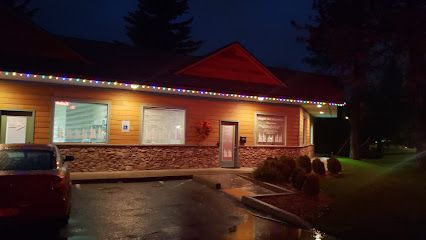
Rathdrum Counseling Center LLC
Rathdrum, ID
- IOP
Substance use treatment · Accepts clients on opioid medication but prescribed elsewhere · Cognitive behavioral therapy
Accepts: Cash or self-payment, Medicaid, Medicare


Find a free or private addiction rehab center in Idaho. Use our search-by-city tool to find recovery near you.
109 centers found (21–40)
Rathdrum, ID
Substance use treatment · Accepts clients on opioid medication but prescribed elsewhere · Cognitive behavioral therapy
Accepts: Cash or self-payment, Medicaid, Medicare

Bonners Ferry, ID
Substance use treatment · Accepts clients on opioid medication but prescribed elsewhere · Cognitive behavioral therapy
Accepts: Cash or self-payment, Medicaid, Medicare
McCall, ID
Substance use treatment · Accepts clients on opioid medication but prescribed elsewhere · Cognitive behavioral therapy
Accepts: Cash or self-payment, Medicaid, Medicare
Lapwai, ID
Substance use treatment · Cognitive behavioral therapy · Dialectical behavior therapy
Accepts: Cash or self-payment, Medicaid, Medicare

Challis, ID
Substance use treatment · Accepts clients on opioid medication but prescribed elsewhere · Cognitive behavioral therapy
Accepts: Cash or self-payment, Private health insurance, Military insurance
Kamiah, ID
Substance use treatment · Cognitive behavioral therapy · Dialectical behavior therapy
Accepts: Cash or self-payment, Medicaid, Medicare
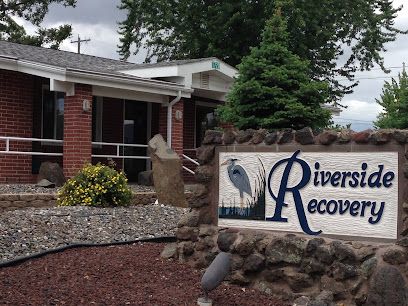
Lewiston, ID
Substance use treatment · Cognitive behavioral therapy · Dialectical behavior therapy
Accepts: Cash or self-payment, Medicaid, State-financed health insurance plan other than Medicaid
Grangeville, ID
Substance use treatment · Does not use medication for opioid addiction · Cognitive behavioral therapy
Accepts: Cash or self-payment, Medicaid, Medicare
Caldwell, ID
Substance use treatment · Cognitive behavioral therapy · Dialectical behavior therapy
Accepts: Cash or self-payment, Medicaid, Medicare

Gooding, ID
Substance use treatment · Accepts clients on opioid medication but prescribed elsewhere · Cognitive behavioral therapy
Accepts: Cash or self-payment, Medicaid, Medicare
Caldwell, ID
Substance use treatment · Does not use medication for opioid addiction · Accepts clients on opioid medication but prescribed elsewhere
Accepts: Cash or self-payment, Medicaid, State-financed health insurance plan other than Medicaid
Pocatello, ID
Substance use treatment · Accepts clients on opioid medication but prescribed elsewhere · Cognitive behavioral therapy
Accepts: Cash or self-payment, Medicaid, Medicare

Boise, ID
Substance use treatment · Cognitive behavioral therapy · Dialectical behavior therapy
Accepts: Cash or self-payment, Medicaid, Medicare
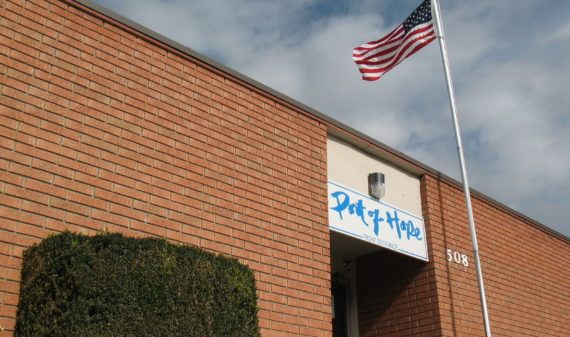
Nampa, ID
Substance use treatment · Accepts clients on opioid medication but prescribed elsewhere · Cognitive behavioral therapy
Accepts: Cash or self-payment, Medicaid, State-financed health insurance plan other than Medicaid
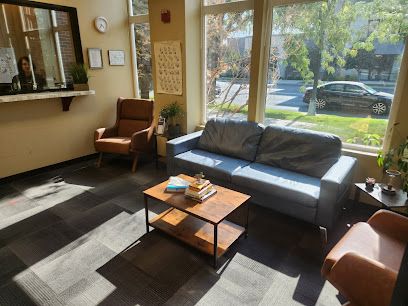
Nampa, ID
Substance use treatment · Accepts clients on opioid medication but prescribed elsewhere · Cognitive behavioral therapy
Accepts: Cash or self-payment, Medicaid, State-financed health insurance plan other than Medicaid
Boise, ID
Substance use treatment · Accepts clients on opioid medication but prescribed elsewhere · Cognitive behavioral therapy
Accepts: Cash or self-payment, Medicaid, State-financed health insurance plan other than Medicaid

Payette, ID
Substance use treatment · Does not treat opioid addiction · Cognitive behavioral therapy
Accepts: Cash or self-payment, Medicaid, Private health insurance
Pocatello, ID
Substance use treatment · Does not treat opioid addiction · Cognitive behavioral therapy
Accepts: Cash or self-payment, Medicaid, State-financed health insurance plan other than Medicaid

Emmett, ID
Substance use treatment · Does not treat opioid addiction · Cognitive behavioral therapy
Accepts: Cash or self-payment, Medicaid, Private health insurance

Payette, ID
Substance use treatment · Does not treat opioid addiction · Cognitive behavioral therapy
Accepts: Cash or self-payment, Medicaid, Private health insurance
Our sponsored hotline can help you compare treatment options and next steps.
Idaho spreads its recovery services across a geography that shapes access as much as any statute does. The state's listed treatment centers concentrate in two corridors — the Treasure Valley around Boise, Nampa, and Meridian, and the eastern belt around Idaho Falls and Pocatello — while the central mountains and the northern Panhandle can leave residents hours from the nearest residential bed. That distance is not a footnote here: for many Idahoans the realistic choice is an outpatient program in their own county rather than a facility across the state. Idaho's culture also leans self-reliant and privacy-minded, and in small towns where word travels fast, simply walking into a clinic can feel exposing. Layered on top is the coverage picture — Idaho expanded Medicaid eligibility in January 2020, after voters approved the expansion at the ballot box in 2018, which changed who can actually pay for care. If you or a loved one is weighing treatment here, the decisive questions tend to be local ones: how far you can travel, whether a program takes your insurance, and whether you can keep working while you get well. This page lays out what Idaho actually offers so you can choose from facts rather than guesswork.
Sober Nation lists 109 treatment centers across Idaho, and they are unevenly distributed. Idaho Falls leads with 15 listed centers, followed by Boise with 14, then Pocatello and Nampa with 9 each. Twin Falls and Coeur d Alene list 6 apiece; Caldwell and Meridian have 5 each; Lewiston lists 4 and Burley 3. That pattern mirrors the state's two population corridors and leaves large rural stretches comparatively underserved.
The service mix skews sharply toward lower-intensity care: 93% of listed centers offer outpatient programs and 89% offer aftercare, while only 14% provide medically supervised detox and just 11% offer residential beds. Medication-assisted treatment sits in the middle, available at 33% of centers. In practical terms, an Idahoan is far more likely to find an outpatient slot near home than an open residential or detox bed. Use the city counts as a rough map of where slots exist, then confirm current openings directly, since availability shifts week to week.
These figures describe the directory, not the full scope of need. Federal survey data give a wider view: SAMHSA's National Survey on Drug Use and Health estimates that about 17% of Idahoans aged 12 or older — roughly 285,000 people — had a substance use disorder in 2022–2023, yet among those who needed substance use treatment, an estimated 74% did not receive it. Idaho's drug overdose death rate remains below the national average — about 17 deaths per 100,000 residents in 2024, or 338 deaths — but it rose over the past decade as fentanyl and methamphetamine spread, with fentanyl-involved deaths reaching a record high in 2023 before easing in 2024.
Because not every center offers every level, where you begin often depends on what exists near you. Ask each program which levels it actually staffs, because a single directory listing may not span the whole continuum of care.
Medically supervised detox — available at 14% of Idaho's listed centers — manages the acute withdrawal that can turn dangerous with alcohol, benzodiazepines, or opioids; it stabilizes the body but is a first step, not a complete treatment. Residential care, at 11%, provides around-the-clock structure away from the people and places tied to use; because these beds are scarce statewide, expect the possibility of a waitlist or a drive to another county. Outpatient programs are the backbone of Idaho treatment at 93%, letting you live at home and keep working or caring for family while attending scheduled counseling and group sessions. Medication-assisted treatment, offered by 33% of centers, pairs medications such as buprenorphine, naltrexone, or methadone with counseling, primarily for opioid and alcohol use disorders. Aftercare — offered by 89% — sustains support once formal treatment ends through alumni groups, continued counseling, and relapse-prevention planning. For many people that continuity is what separates a strong start from a durable recovery.
Cost is frequently the first barrier, and at Idaho's listed centers coverage is comparatively broad: 91% accept Medicaid and 49% accept Medicare. The Medicaid figure carries real weight because Idaho expanded Medicaid eligibility to more low-income adults in January 2020 — a change voters approved by ballot initiative in 2018 — which for many residents converted treatment from out of reach to covered.
If you carry private insurance, the federal Mental Health Parity and Addiction Equity Act generally bars health plans that cover substance use treatment from imposing stricter limits on it than on comparable medical or surgical care — but the details decide everything, so ask specifically about in-network facilities, prior authorization, and which levels of care are included. For people without any coverage, Idaho funds treatment through its state behavioral health system, which draws on state and federal block-grant dollars, and many centers also offer sliding-scale fees based on income.
Whatever your situation, get the numbers in writing before you commit: confirm what the insurer or program will pay and what you will owe out of pocket, because coverage varies widely between plans, facilities, and levels of care. A short phone call up front can prevent a large surprise later.
Several public organizations can help you find care and figure out how to pay for it. Idaho's designated Single State Agency for substance use services is the Idaho Department of Health and Welfare, Division of Behavioral Health, which oversees publicly funded treatment and can direct you to state-contracted providers. NAMI Idaho, the state chapter of the National Alliance on Mental Illness, provides free education, family support groups, and peer connection for people facing co-occurring mental health and substance use conditions. And if you or someone nearby is in immediate danger, the 988 Suicide and Crisis Lifeline reaches trained counselors 24/7 by call or text, including support for substance use crises, not only suicidal ones. Together these three cover distinct needs — finding treatment, supporting families, and responding to a crisis as it happens. Treat them as starting points rather than endorsements, and confirm current hours, eligibility, and services when you reach out.