Ozark Guidance Center
Berryville, AR
- Outpatient
- MAT
Substance use treatment · Cognitive behavioral therapy · Substance abuse counseling
Accepts: Cash or self-payment, Medicaid, Medicare


Find a free or private addiction rehab center in Arkansas. Use our search-by-city tool to find recovery near you.
157 centers found (61–80)
Berryville, AR
Substance use treatment · Cognitive behavioral therapy · Substance abuse counseling
Accepts: Cash or self-payment, Medicaid, Medicare
Bentonville, AR
Substance use treatment · Cognitive behavioral therapy · Substance abuse counseling
Accepts: Cash or self-payment, Medicaid, Medicare
Huntsville, AR
Substance use treatment · Cognitive behavioral therapy · Substance abuse counseling
Accepts: Cash or self-payment, Medicaid, Medicare
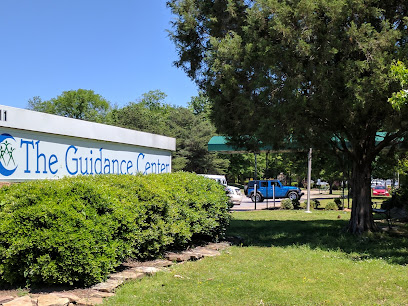
Paris, AR
Substance use treatment · Cognitive behavioral therapy · Dialectical behavior therapy
Accepts: Cash or self-payment, Medicaid, Medicare
Rogers, AR
Substance use treatment · Does not use medication for opioid addiction · Cognitive behavioral therapy
Accepts: Cash or self-payment, Medicaid, Private health insurance

Fort Smith, AR
Substance use treatment · Does not treat opioid addiction · Cognitive behavioral therapy
Accepts: Cash or self-payment, Medicare, State-financed health insurance plan other than Medicaid
Hot Springs National Park, AR
Substance use treatment · Accepts clients on opioid medication but prescribed elsewhere · Cognitive behavioral therapy
Accepts: Cash or self-payment, Medicaid, State-financed health insurance plan other than Medicaid
Blytheville, AR
Substance use treatment · Cognitive behavioral therapy · Substance abuse counseling
Accepts: Cash or self-payment, Medicaid, Medicare
Salem, AR
Substance use treatment · Cognitive behavioral therapy · Substance abuse counseling
Accepts: Cash or self-payment, Medicaid, Medicare
Mountain Home, AR
Substance use treatment · Cognitive behavioral therapy · Substance abuse counseling
Accepts: Cash or self-payment, Medicaid, Medicare
Fayetteville, AR
Substance use treatment · Does not use medication for opioid addiction · Cognitive behavioral therapy
Accepts: Cash or self-payment, Medicaid, Private health insurance
Little Rock, AR
Substance use treatment · Accepts clients on opioid medication but prescribed elsewhere · Cognitive behavioral therapy
Accepts: Cash or self-payment, Private health insurance
Fayetteville, AR
Substance use treatment · Accepts clients on opioid medication but prescribed elsewhere · Cognitive behavioral therapy
Accepts: Cash or self-payment, Medicaid, State-financed health insurance plan other than Medicaid
Paragould, AR
Substance use treatment · Cognitive behavioral therapy · Substance abuse counseling
Accepts: Cash or self-payment, Medicaid, Medicare
Marianna, AR
Substance use treatment · Cognitive behavioral therapy · Substance abuse counseling
Accepts: Cash or self-payment, Medicaid, Medicare
Searcy, AR
Substance use treatment · Cognitive behavioral therapy · Substance abuse counseling
Accepts: Cash or self-payment, Medicaid, Medicare
Cherokee Village, AR
Substance use treatment · Cognitive behavioral therapy · Substance abuse counseling
Accepts: Cash or self-payment, Medicaid, Medicare
Little Rock, AR
Substance use treatment · Accepts clients on opioid medication but prescribed elsewhere · Cognitive behavioral therapy
Accepts: Cash or self-payment, Private health insurance, Sliding fee scale
Berryville, AR
Substance use treatment · Does not use medication for opioid addiction · Cognitive behavioral therapy
Accepts: Cash or self-payment, Medicaid, State-financed health insurance plan other than Medicaid
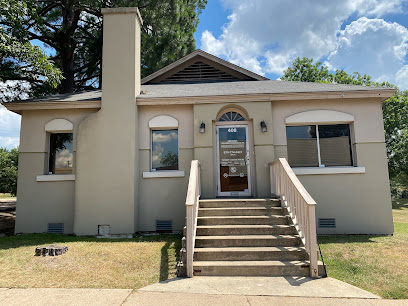
Texarkana, AR
Substance use treatment · All Clients in Opioid Treatment Program · SAMHSA-certified Opioid Treatment Program
Accepts: Cash or self-payment
Our sponsored hotline can help you compare treatment options and next steps.
Arkansas's treatment access story is shaped first by geography. Outside the Little Rock metro, much of the state is rural — the Delta farmland to the east, the Ozark and Ouachita highlands to the north and west — and a long drive to a licensed program is a routine part of getting care here. That pattern shows in where facilities cluster: most of Arkansas's listed centers sit along the Arkansas River and Interstate 40 corridor, running from Fort Smith through Russellville and Conway into Little Rock and North Little Rock. Coverage is the state's other defining feature. Arkansas expanded Medicaid in 2014 through a distinctive "private option" — using federal dollars to buy private marketplace plans for eligible adults rather than a conventional expansion — a model now run as ARHOME and one Arkansas remains the only state to use. That choice still shapes who can afford residential and outpatient care. Methamphetamine has long been a fixture of the state's substance-use picture, and, as across the country, fentanyl now drives most overdose deaths — though Arkansas's overdose toll has actually fallen sharply since 2021, to an estimated 391 deaths in 2024, the fewest since 2019. If you or a loved one is starting to look, understanding how the state is laid out helps you plan realistically.
Sober Nation lists 157 treatment centers across Arkansas, and they are heavily concentrated in and around the capital. Little Rock alone accounts for 17 listed centers, followed by Fort Smith with 11 and Russellville with 7. Fayetteville and North Little Rock list 6 each; Hot Springs National Park and Jonesboro list 5 each; and Rogers, Conway, and Pine Bluff round things out with 4 each. That distribution closely tracks the state's population centers and its main highway corridor — useful context if you live in a rural county and are weighing the cost of travel against the value of staying close to home and family during treatment.
For the wider picture, federal survey data tells you more than any single directory can. In 2022–2023, an estimated 17.6% of Arkansans aged 12 or older — roughly 450,000 people — met the criteria for a substance use disorder in the past year, according to SAMHSA's National Survey on Drug Use and Health. That same survey points to a wide treatment gap: about three in four Arkansans classified as needing substance use treatment did not receive any. The state's overdose picture, meanwhile, has improved recently — deaths fell from a 2021 peak of 637 to an estimated 391 in 2024, the lowest total since 2019, even as fentanyl remains the main driver of the overdoses that still occur. Together, those figures give you a sense of scale that a directory count cannot, so read them alongside our listings rather than in place of them.
Most treatment in Arkansas happens on an outpatient basis: 93% of listed centers offer outpatient care, meaning you live at home and attend scheduled counseling and group sessions. For many people that is where treatment begins, and for milder cases it can be enough on its own. Medically supervised detox — the short-term process of withdrawing safely under clinical care — is far less common, offered by just 17% of centers, so if managing withdrawal is your first need, call ahead to confirm a program can provide it. Residential, or inpatient, care means staying on-site around the clock; 15% of listed centers offer it, and it suits people who need to step fully away from their environment to stabilize. Medication-assisted treatment (MAT), which pairs medications such as buprenorphine or naltrexone with counseling, is available at 53% of centers — important to know if opioids are involved. Aftercare, the ongoing support that follows a formal program, is nearly universal at 88%. A common progression runs detox or residential first, then outpatient, then long-term aftercare — though the right starting point depends entirely on your situation.
Coverage is usually the first thing to sort out, and in Arkansas it is often the deciding factor. Among the state's listed centers, 79% accept Medicaid and 46% accept Medicare — a notably high Medicaid acceptance rate that reflects Arkansas's decision to expand Medicaid through its "private option," which buys private marketplace plans for eligible adults — a model, now run as ARHOME, that Arkansas remains the only state to use. If you are already enrolled, or think you might qualify, that acceptance rate widens your options considerably. Because what each plan actually covers can vary, ask the center to verify your specific benefits — and any prior-authorization requirements — before you commit to a program. Federal mental health parity rules — chiefly the Mental Health Parity and Addiction Equity Act — generally require insurers that cover behavioral health and addiction care to do so on terms no more restrictive than they apply to medical and surgical care, which can matter when you are comparing plans. If you are uninsured or underinsured, some Arkansas programs offer sliding-scale fees or publicly funded treatment slots — administered through the state's behavioral health agency using federal block-grant and state dollars — for residents who qualify. Do your research and ask each program directly what they accept and what you would owe out of pocket.
A few reliable, no-cost starting points if you are lining up help in Arkansas — each is open to residents regardless of insurance status:
When you call any of these, it helps to have a rough sense of what you are looking for — detox, outpatient, or MAT — but you do not need to have it all figured out first.