26 Drug & Alcohol Rehabs In Washington, DC

Find drug and alcohol rehab centers in Washington, DC and start your recovery today.

Drug and alcohol rehab centers in Washington, DC

26 centers found (1–20)

1.1 mi
0.8 mi
So Others Might Eat Inc (SOME) facility photo0 mi

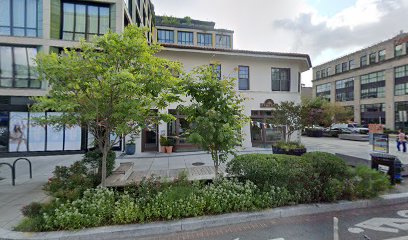
So Others Might Eat Inc (SOME)

Washington, DC

  • IOP
  • MAT

Substance use treatment · Accepts clients on opioid medication but prescribed elsewhere · Cognitive behavioral therapy

Accepts: Medicaid, Medicare, State-financed health insurance plan other than Medicaid

0 mi
1.4 mi
3 mi
1.8 mi
4.1 mi

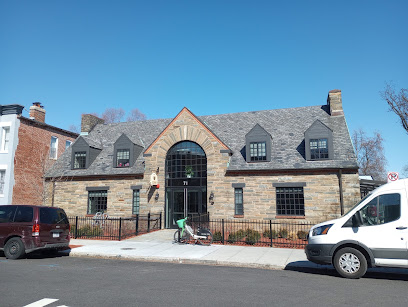
SOME Conway Center

Washington, DC

  • IOP

Substance use treatment · Accepts clients on opioid medication but prescribed elsewhere · Cognitive behavioral therapy

Accepts: Medicaid, Medicare, State-financed health insurance plan other than Medicaid

4.1 mi
2.1 mi
2.8 mi
3.1 mi
1.1 mi
4 mi
5.1 mi

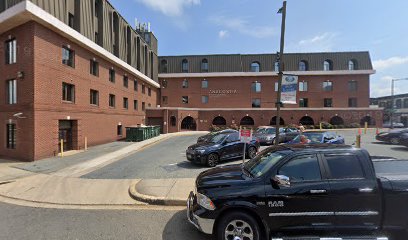
Aquila Recovery Clinic

Washington, DC

  • PHP
  • IOP
  • MAT
  • Sober Living

Substance use treatment · Cognitive behavioral therapy · Dialectical behavior therapy

Accepts: Cash or self-payment, Private health insurance, Active duty military

5.1 mi
2.1 mi
3.1 mi
0.2 mi
2.7 mi
Clean and Sober Streets facility photo0.9 mi

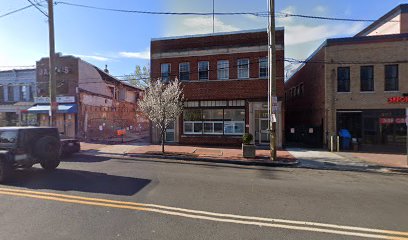
Clean and Sober Streets

Washington, DC

  • Residential
  • IOP
  • MAT
  • Sober Living

Substance use treatment · Accepts clients on opioid medication but prescribed elsewhere · Cognitive behavioral therapy

Accepts: Medicaid, State-financed health insurance plan other than Medicaid

0.9 mi
1.2 mi
0.8 mi

Do you need help finding rehab in Washington, DC?

Call our sponsored hotline to speak with someone about treatment options near you.

Sober Nation lists 26 treatment centers in Washington, DC, a focused set of options for a capital that is unlike any state on this site. The District of Columbia is not part of Maryland or Virginia — it is a federal district of roughly 68 square miles on the east bank of the Potomac, carved into four quadrants (Northwest, Northeast, Southwest, and Southeast) that fan out from the U.S. Capitol and organized into eight wards. Care is spread across those wards rather than one medical district: programs sit in neighborhoods from Columbia Heights and Petworth in upper Northwest to Anacostia and Congress Heights east of the river in Wards 7 and 8, where the need has long been most acute. The closest program is not automatically the right one. This page is a plain guide to what those 26 centers actually offer — the levels of care, how people pay, and where to look if the best fit sits across a state line.

Levels of Care in Washington, DC

Across the District's listed programs, counseling and outpatient support form the backbone. All 26 centers provide substance use treatment and individual counseling, and 25 offer substance abuse counseling. 24 centers deliver outpatient care and 23 provide standard (regular) outpatient treatment — scheduled sessions you attend while continuing to live at home, usually the practical place to start.

The clinical groundwork is consistent citywide. 25 centers offer screening for substance use and 24 provide a comprehensive substance use assessment — the intake step that matches you to the right intensity of care. Common offerings include group counseling (24 centers), family counseling (24), motivational interviewing (24), relapse prevention (24), cognitive behavioral therapy (CBT) (23), and trauma-related counseling (22). Support is built to continue past the first weeks: all 26 centers include discharge planning, 23 provide case management, and 23 offer aftercare or continuing care. Given the District's long public-health history, it is also worth noting that 24 centers provide HIV/AIDS education, and 21 screen for co-occurring mental health conditions.

On program setting, all 26 centers we list serve all genders — our DC data does not break out men-only or women-only facilities, so if a gender-specific environment matters to your recovery, confirm it with the listing. The same goes for medically supervised detox, residential or inpatient beds, intensive outpatient (IOP), and medication-assisted treatment (buprenorphine, methadone, or naltrexone): these are not uniformly reported in our listings, so open each center's page and confirm by phone before you count on it.


Paying for Rehab in Washington, DC

Cost is usually the first real question, and it should not be the thing that stops you from calling. Among our DC listings, 23 of the 26 centers accept Medicaid, and 24 are connected to the District's single state substance abuse authority — the DC Department of Behavioral Health (DBH), which funds and coordinates publicly supported treatment for residents. Many centers also bill private insurance and take cash or self-pay; because our data does not report those consistently, verify your specific plan, in-network status, and any sliding-scale or payment-plan options with the center directly before your first visit.

Washington, DC expanded Medicaid, and DC Medicaid covers substance use disorder treatment for eligible residents. The program is administered by the DC Department of Health Care Finance, which handles eligibility and enrollment; because those rules and covered services change over time, check current details with DHCF rather than guessing. If cost is the obstacle, DBH is also a starting point for connecting to publicly funded care, and its intake staff can point you toward programs regardless of ability to pay.

Traveling for Treatment and Nearby Options

Sometimes the right program is not in the District itself. A bed opens sooner nearby, a specialized track fits better, or a little distance from familiar surroundings helps in early recovery. Because Washington, DC is small and hemmed in by state lines, its metro area spills directly into Maryland and Virginia — and those suburbs are their own jurisdictions with separate Medicaid programs.

To the north and east in Maryland, communities such as Silver Spring, Bethesda, Hyattsville, and Rockville sit minutes from the District line, while across the Potomac in Virginia, Arlington, Alexandria, and Falls Church are just as close. Coverage does not always travel across state lines, so if you are on DC Medicaid, confirm whether an out-of-state program is in-network before you commit. Where a DC center offers telehealth counseling, that can bridge the gap while you wait for an in-person spot or if travel is hard. And you can always search licensed, SAMHSA-verified programs nationwide at findtreatment.gov.

Frequently Asked Questions

How many rehabs are in Washington, DC?

Sober Nation lists 26 treatment centers in Washington, DC. Most are built around counseling and outpatient support — individual counseling at all 26, substance abuse counseling at 25, group and family counseling at 24 each, motivational interviewing at 24, CBT at 23, and relapse prevention at 24. All 26 serve all genders, and every one includes discharge planning to help you line up next steps.

Does DC Medicaid cover rehab in Washington, DC?

Yes. Washington, DC expanded Medicaid, and DC Medicaid — administered by the DC Department of Health Care Finance — covers substance use disorder treatment for eligible residents. 23 of the 26 centers we list report accepting Medicaid. Whether a specific service is covered for you depends on your plan and the center, so confirm directly before you start, or contact the DC Department of Behavioral Health to connect with publicly funded care.

What if the right program is in Maryland or Virginia?

That is common in the DC metro, where the suburbs begin just past the District line. Maryland communities like Silver Spring and Bethesda and Virginia ones like Arlington and Alexandria are minutes away, but they are separate states with their own Medicaid programs — confirm in-network coverage before you commit. Many DC centers also offer telehealth. If you or someone you love is in immediate crisis, call or text 988 for free, confidential support any time.

Sources

  1. 1.DC Department of Behavioral Health — the District's substance abuse authority and publicly funded treatment https://dbh.dc.gov/
  2. 2.DC Medicaid coverage for substance use treatment, administered by the DC Department of Health Care Finance https://dhcf.dc.gov/
  3. 3.Find licensed, SAMHSA-verified treatment nationwide https://findtreatment.gov/
  4. 4.988 Suicide & Crisis Lifeline — free, confidential, 24/7 support https://988lifeline.org/