KY
Ethan Health, Richmond
Richmond, KY
- Outpatient
Substance Abuse / Mental Health / Family Therapy · Cbt, Dbt, Emdr, Trauma Focused
Accepts: Commercial Insurance, Medicaid


Find a free or private addiction rehab center in Kentucky. Use our search-by-city tool to find recovery near you.
Richmond, KY
Substance Abuse / Mental Health / Family Therapy · Cbt, Dbt, Emdr, Trauma Focused
Accepts: Commercial Insurance, Medicaid
Louisville, KY
Substance Abuse · Luxury Facility · Dbt, Cbt, 12 Step
Accepts: Ppo Insurance
Burlington, KY
Substance Abuse, Mental Health, Family Therapy · Cbt, Dbt, Emdr, Trauma Focused
Accepts: Commercial Insurance, Medicaid
446 centers found (1–20)
Paducah, KY
Substance use treatment · Cognitive behavioral therapy · Dialectical behavior therapy
Accepts: Cash or self-payment, Medicaid, Medicare
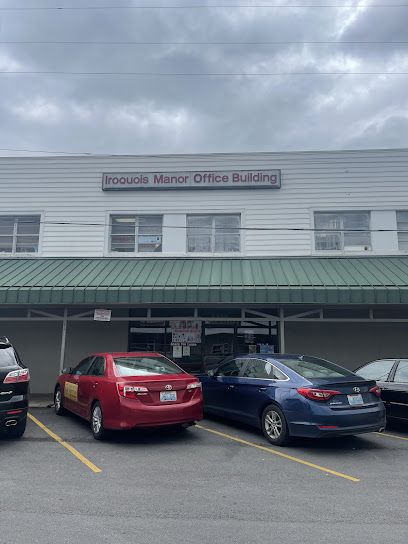
Louisville, KY
Substance use treatment · Cognitive behavioral therapy · Substance abuse counseling
Accepts: Cash or self-payment, Medicaid, Medicare
Louisville, KY
Substance use treatment · Cognitive behavioral therapy · Dialectical behavior therapy
Accepts: Cash or self-payment, Medicaid, Medicare
Louisville, KY
Substance use treatment · Accepts clients on opioid medication but prescribed elsewhere · Cognitive behavioral therapy
Accepts: Cash or self-payment, Medicaid, Medicare

Somerset, KY
Substance use treatment · Cognitive behavioral therapy · Substance abuse counseling
Accepts: Cash or self-payment, Medicaid, Medicare
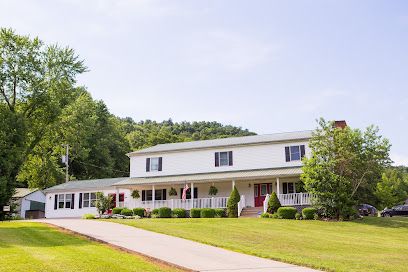
Wallingford, KY
Substance use treatment · Cognitive behavioral therapy · Dialectical behavior therapy
Accepts: Cash or self-payment, Medicaid, State-financed health insurance plan other than Medicaid

Bowling Green, KY
Substance use treatment · Cognitive behavioral therapy · Dialectical behavior therapy
Accepts: Cash or self-payment, Medicaid, State-financed health insurance plan other than Medicaid
Lexington, KY
Substance use treatment · Accepts clients on opioid medication but prescribed elsewhere · Cognitive behavioral therapy
Accepts: Cash or self-payment, Medicaid, State-financed health insurance plan other than Medicaid

Erlanger, KY
Substance use treatment · Accepts clients on opioid medication but prescribed elsewhere · Cognitive behavioral therapy
Accepts: Cash or self-payment, Medicaid, Medicare
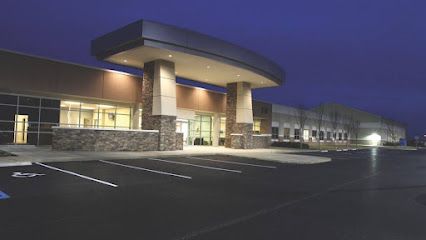
Hopkinsville, KY
Substance use treatment · Accepts clients on opioid medication but prescribed elsewhere · Cognitive behavioral therapy
Accepts: Cash or self-payment, Medicaid, Medicare
Louisville, KY
Substance use treatment · Accepts clients on opioid medication but prescribed elsewhere · Cognitive behavioral therapy
Accepts: Cash or self-payment, Medicaid, State-financed health insurance plan other than Medicaid

Erlanger, KY
Substance use treatment · Accepts clients on opioid medication but prescribed elsewhere · Cognitive behavioral therapy
Accepts: Cash or self-payment, Medicaid, State-financed health insurance plan other than Medicaid
Louisville, KY
Substance use treatment · Cognitive behavioral therapy · Dialectical behavior therapy
Accepts: Cash or self-payment, Private health insurance, Military insurance
Mount Sterling, KY
Substance use treatment · All Clients in Opioid Treatment Program · Cognitive behavioral therapy
Accepts: Cash or self-payment, Medicaid, Private health insurance
Elizabethtown, KY
Substance use treatment · Accepts clients on opioid medication but prescribed elsewhere · Cognitive behavioral therapy
Accepts: Cash or self-payment, Medicaid, State-financed health insurance plan other than Medicaid
Fort Mitchell, KY
Substance use treatment · Cognitive behavioral therapy · Dialectical behavior therapy
Accepts: Cash or self-payment, Medicare, State-financed health insurance plan other than Medicaid

London, KY
Substance use treatment · Cognitive behavioral therapy · Dialectical behavior therapy
Accepts: Cash or self-payment, Medicare, State-financed health insurance plan other than Medicaid
Georgetown, KY
Substance use treatment · Cognitive behavioral therapy · Dialectical behavior therapy
Accepts: Cash or self-payment, Medicare, State-financed health insurance plan other than Medicaid

Louisville, KY
Substance use treatment · Cognitive behavioral therapy · Dialectical behavior therapy
Accepts: Cash or self-payment, Medicare, State-financed health insurance plan other than Medicaid
Louisa, KY
Substance use treatment · All Clients in Opioid Treatment Program · Cognitive behavioral therapy
Accepts: Cash or self-payment, Medicaid, Private health insurance
Our sponsored hotline can help you compare treatment options and next steps.
Kentucky's treatment map looks different from most states'. Alongside Louisville and Lexington, four of the ten cities with the most listed centers — Prestonsburg, Ashland, Louisa, and Hazard — sit in the Appalachian east, the rural coalfield region that was among the areas hardest hit when the prescription-opioid crisis first took hold in central Appalachia (Appalachian Regional Commission, 2019). It is a largely rural state, and outside its two urban anchors its people spread thin across small towns and mountain communities, which is why access, not just availability, is the real question for many families. That history and geography shaped where care exists today and how far some people still drive to reach it. Kentucky was also an early mover on policy: it built KASPER, one of the nation's early statewide electronic prescription-monitoring programs, operational since 1999 (Kentucky CHFS), to track controlled-substance prescribing, and it passed Casey's Law, which lets a family petition a court to order treatment for a loved one who cannot yet ask for help themselves (Casey's Law, enacted 2004; KRS 222.430–437). In 2014 it expanded Medicaid under the Affordable Care Act, widening coverage for addiction care to many adults who previously had none (KFF). If you or someone you love is weighing options here, this backdrop matters — it explains where beds are concentrated, what public insurance will pay for, and where distance still stands between people and care.
Sober Nation lists 446 treatment centers across Kentucky. The largest concentrations are in the two metro areas — Louisville, with 39 listed centers, and Lexington, with 33 — followed by Elizabethtown at 15. After that, listings spread into smaller cities where need runs high relative to population: Prestonsburg and Bowling Green (13 each), Ashland and Owensboro (11 each), and Paducah, Louisa, and Hazard (10 each). Several of those smaller hubs sit in eastern Kentucky, where residential options remain thinner than in the cities.
The mix of services tells its own story. Among listed centers, 87% offer outpatient care and 90% offer some form of aftercare — the two most widely available levels. By contrast, 19% provide medically supervised detox and 18% offer residential (inpatient) programs, the more intensive and resource-heavy options. Just over half, 52%, offer medication-assisted treatment (MAT), now considered a front-line standard for opioid use disorder. The concentration of centers in Louisville and Lexington also means that for someone in a rural county, the nearest detox unit or residential bed may be an hour or more away — a gap the high outpatient and aftercare numbers only partly close.
These figures describe the centers in our directory, not the whole population. For statewide context: an estimated 17.5% of Kentuckians aged 12 or older — roughly one in six — met the criteria for a substance use disorder in the past year, and about 70% of those who needed substance use treatment did not receive it (SAMHSA NSDUH, 2022–2023). On overdose, the trend has recently turned: Kentucky recorded 1,410 drug overdose deaths in 2024, a 30.2% drop from the prior year and a third consecutive annual decline (Kentucky ODCP, 2024).
Addiction care is organized as a continuum, from the most intensive medical settings to lighter ongoing support, and where you start depends on how severe use has become and whether stopping carries medical risk. The levels below build on one another, and many people move through more than one.
If you are unsure which level fits, a facility's intake team can assess you and recommend a starting point. There is no single right answer; it depends on your health, your history, and what is available near you.
Cost is often the first worry, and in Kentucky the coverage picture is comparatively broad. Among listed centers, 80% accept Medicaid and 44% accept Medicare, meaning most facilities in the state will bill public insurance rather than requiring full payment up front.
That high Medicaid figure reflects a policy choice. Kentucky expanded Medicaid eligibility under the Affordable Care Act, extending coverage to many low-income adults who previously had none (KFF). Substance use and mental health services are covered as essential health benefits, and federal parity law requires that addiction treatment be covered on terms comparable to other medical care (federal Mental Health Parity and Addiction Equity Act; CMS). Costs still vary widely by level of care, since a few weeks of residential treatment carries a very different price than weekly outpatient counseling.
If you are uninsured, you still have options. Ask facilities about sliding-scale fees, state-funded treatment slots, and programs supported by federal block grants (SAMHSA). Private insurance, self-pay, and monthly payment plans are also common across the state. Whatever your situation, verify the specifics before committing: when you call a center, ask exactly what your plan covers, whether the program is in network, whether prior authorization is required, and what your out-of-pocket costs would be — coverage varies by policy and by program.
You do not have to sort through hundreds of listings alone. Several public agencies and nonprofits can help you find care in Kentucky or figure out how to pay for it:
If you do not know where to begin, your regional community mental health center is a practical first call — staff can screen you, explain local options, and point you toward treatment that fits your coverage.