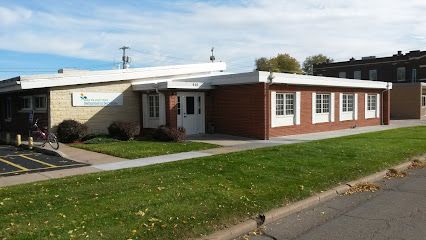
South Central Behavioral Services Inc
Hastings, NE
- Outpatient
- MAT
Substance use treatment · Cognitive behavioral therapy · Dialectical behavior therapy
Accepts: Medicaid, State-financed health insurance plan other than Medicaid


Find a free or private addiction rehab center in Nebraska. Use our search-by-city tool to find recovery near you.
120 centers found (41–60)
Hastings, NE
Substance use treatment · Cognitive behavioral therapy · Dialectical behavior therapy
Accepts: Medicaid, State-financed health insurance plan other than Medicaid

Omaha, NE
Substance use treatment · All Clients in Opioid Treatment Program · SAMHSA-certified Opioid Treatment Program
Accepts: Cash or self-payment, Sliding fee scale

Lincoln, NE
Substance use treatment · Accepts clients on opioid medication but prescribed elsewhere · Cognitive behavioral therapy
Accepts: Cash or self-payment, State-financed health insurance plan other than Medicaid, Private health insurance

Norfolk, NE
Substance use treatment · Accepts clients on opioid medication but prescribed elsewhere · Cognitive behavioral therapy
Accepts: Cash or self-payment, Medicaid, State-financed health insurance plan other than Medicaid

Columbus, NE
Substance use treatment · Accepts clients on opioid medication but prescribed elsewhere · Cognitive behavioral therapy
Accepts: Cash or self-payment, Medicaid, State-financed health insurance plan other than Medicaid
Grand Island, NE
Substance use treatment · Accepts clients on opioid medication but prescribed elsewhere · Cognitive behavioral therapy
Accepts: Cash or self-payment, Medicaid, State-financed health insurance plan other than Medicaid
Scottsbluff, NE
Substance use treatment · Does not use medication for opioid addiction · Cognitive behavioral therapy
Accepts: Cash or self-payment, Medicaid, Medicare
Omaha, NE
Substance use treatment · Accepts clients on opioid medication but prescribed elsewhere · Cognitive behavioral therapy
Accepts: Cash or self-payment, Medicaid, Active duty military

Lincoln, NE
Substance use treatment · Accepts clients on opioid medication but prescribed elsewhere · Cognitive behavioral therapy
Accepts: Cash or self-payment, Medicaid, State-financed health insurance plan other than Medicaid
Omaha, NE
Substance use treatment · Does not use medication for opioid addiction · Cognitive behavioral therapy
Accepts: Cash or self-payment, Medicaid, Medicare
Omaha, NE
Substance use treatment · Does not use medication for opioid addiction · Cognitive behavioral therapy
Accepts: Medicaid, Medicare, State-financed health insurance plan other than Medicaid
Omaha, NE
Substance use treatment · Accepts clients on opioid medication but prescribed elsewhere · Cognitive behavioral therapy
Accepts: Cash or self-payment, Medicaid, State-financed health insurance plan other than Medicaid
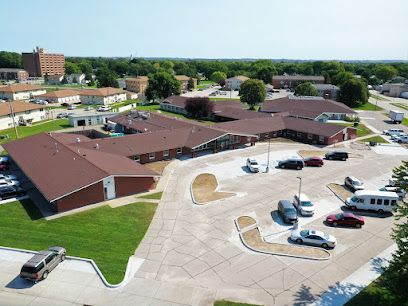
Norfolk, NE
Substance use treatment · Accepts clients on opioid medication but prescribed elsewhere · Cognitive behavioral therapy
Accepts: Cash or self-payment, Medicaid, Medicare
Norfolk, NE
Substance use treatment · Accepts clients on opioid medication but prescribed elsewhere · Cognitive behavioral therapy
Accepts: Cash or self-payment, Medicaid, State-financed health insurance plan other than Medicaid
Ogallala, NE
Substance use treatment · Does not treat opioid addiction · Cognitive behavioral therapy
Accepts: Cash or self-payment, Medicaid, Medicare
Mc Cook, NE
Substance use treatment · Does not treat opioid addiction · Cognitive behavioral therapy
Accepts: Cash or self-payment, Medicaid, Medicare
Lexington, NE
Substance use treatment · Does not treat opioid addiction · Cognitive behavioral therapy
Accepts: Cash or self-payment, Medicaid, Medicare
Hastings, NE
Substance use treatment · Does not use medication for opioid addiction · Cognitive behavioral therapy
Accepts: Cash or self-payment, Medicaid, Private health insurance
Lincoln, NE
Substance use treatment · Accepts clients on opioid medication but prescribed elsewhere · Cognitive behavioral therapy
Accepts: Cash or self-payment, Medicaid, State-financed health insurance plan other than Medicaid
Kearney, NE
Substance use treatment · Accepts clients on opioid medication but prescribed elsewhere · Cognitive behavioral therapy
Accepts: Cash or self-payment, Medicaid, State-financed health insurance plan other than Medicaid
Our sponsored hotline can help you compare treatment options and next steps.
For many Nebraskans, the distance between a person and their first appointment is measured in hours, not minutes. Omaha and Lincoln alone account for 30 and 22 of the state's 120 listed treatment centers, which means someone living in the Sandhills or the panhandle may face a long drive to the nearest residential bed. That geography shapes how recovery works here. The state leans heavily on outpatient programs, telehealth, and a network of six regional behavioral health authorities that coordinate publicly funded care across largely rural, sometimes frontier-designated counties. Winters are real, too, and a two-hour drive can turn impassable in January — part of why close-to-home options carry so much weight. Nebraska's substance-use picture has also historically leaned toward alcohol more than opioids — federal survey estimates put alcohol use disorder (about 185,000 Nebraskans aged 12 or older in an average year) well ahead of opioid use disorder (about 33,000) — a pattern tied to its agricultural, small-town communities. On the policy side, Nebraska expanded Medicaid through a 2018 voter-approved ballot measure, implemented in October 2020, widening the payment options that often decide whether treatment is actually reachable. If you or a loved one is weighing where to start, the practical questions here are usually two: how do you get there, and who pays once you do.
Sober Nation lists 120 treatment centers across Nebraska, and where they sit tells you a lot about access. Omaha leads with 30 listed centers and Lincoln follows with 22, together forming the state's treatment core. After that, the count drops sharply. Norfolk has 8, Grand Island has 6, and North Platte, Columbus, and Hastings each have 5. Smaller hubs like Fremont and O'Neill list 3 apiece, and Scottsbluff — the largest city in the panhandle — shows just 2. For families west of Grand Island, that thin coverage is the central planning challenge, not a footnote.
The mix of services is just as revealing. Statewide, 83% of listed centers offer outpatient care and 93% offer aftercare, while only 11% provide medically supervised detox and 28% offer residential beds. Medication-assisted treatment is available at 46% of centers. On payment, 88% accept Medicaid and 34% accept Medicare. These figures describe what is listed, not the full scope of need. Federal survey data fill in that picture: an estimated 16.2% of Nebraskans aged 12 or older — roughly 266,000 people — met the criteria for a substance use disorder in the past year, and about 75% of those classified as needing treatment did not receive it (SAMHSA NSDUH, 2022–2023 annual average). Even so, Nebraska's overdose burden is comparatively light: its drug overdose death rate was 8.1 per 100,000 residents in 2024, well below the national rate of 23.1 and among the lowest in the country (KFF analysis of CDC data).
Think of these levels as a continuum, and use Nebraska's actual availability to set expectations. Detox, offered by just 11% of listed centers, is medically supervised withdrawal — the right first step when physical dependence on alcohol, opioids, or benzodiazepines is severe, but scarce enough here that you may need to travel or call ahead. Residential, or inpatient, care at 28% means living on-site for structured, round-the-clock treatment, usually for a defined stretch of weeks. Outpatient care is the workhorse of Nebraska recovery at 83%, letting you live at home while attending scheduled sessions — often the only practical option in rural counties. Medication-assisted treatment, at 46%, pairs FDA-approved medications with counseling and is especially relevant for opioid and alcohol dependence. Aftercare, offered by 93% of centers, covers the ongoing support — alumni groups, continued counseling, relapse-prevention planning — that holds gains in place once formal treatment ends. Most people move through several of these levels rather than just one, so ask each program how it hands you off to the next. If you are unsure which level fits, an assessment at an outpatient provider can point you to the right starting intensity.
How you'll pay often decides where you can go. Among Nebraska's listed centers, 88% accept Medicaid and 34% accept Medicare — a wide Medicaid footprint that matters because Nebraska expanded Medicaid eligibility to more low-income adults, extending coverage to those earning up to 138% of the federal poverty level after voters approved expansion in 2018 and the state implemented it in October 2020, so more working-age Nebraskans may qualify than assume they do. If you carry private insurance, the federal Mental Health Parity and Addiction Equity Act generally requires plans that cover substance use treatment to do so on terms no more restrictive than other medical care, though specific benefits, prior-authorization rules, and in-network options vary from plan to plan. For the uninsured, publicly funded treatment is coordinated through the state's six regional behavioral health authorities, and some centers offer sliding-scale fees or state-funded slots. None of this is one-size-fits-all. The practical move is to call the facility directly, confirm exactly what your coverage includes, and ask about payment assistance before you commit to anything. Do your research and ask questions — you are your own best advocate, and getting the specifics in writing protects you later.
A few Nebraska-specific starting points can shortcut the search. The state's SAMHSA-designated Single State Agency for substance use services is the Nebraska Division of Behavioral Health, housed within the Department of Health and Human Services, which oversees the six regional authorities and publicly funded treatment. For mental health support that often runs alongside substance use, NAMI Nebraska offers education, family support groups, and connection to local resources. And if you or someone you love is in crisis right now, the 988 Suicide and Crisis Lifeline connects you with trained counselors any hour of the day, by call or text, at no cost. When you reach any of these, write down names and concrete next steps — a warm handoff to a specific program beats a general phone number every time.