CA
RECOVERY BEACH
GARDEN GROVE, CA
- Detox
- Residential
Newly Renovated Low Rise Condominium Complex · Dual Diagnosis, Mat, Cbt, Emdr, Group, 1:1'S
Accepts: Cash, Credit Cards, Ppo Insurance, Aetna Hmo, Blue Shield Of Ca Hmo, Magellan Health, Triwest


Find a free or private addiction rehab center in California. Use our search-by-city tool to find recovery near you.
GARDEN GROVE, CA
Newly Renovated Low Rise Condominium Complex · Dual Diagnosis, Mat, Cbt, Emdr, Group, 1:1'S
Accepts: Cash, Credit Cards, Ppo Insurance, Aetna Hmo, Blue Shield Of Ca Hmo, Magellan Health, Triwest
Lake Forest, CA
Mat, Dual Diagnosis, Iop, Php · Couples Rehab
Accepts: Insurance, Cash
Los Angeles, CA
Addiction Treatment And Dual Diagnosis Treatment
Accepts: We Accept Most Ppo Insurance Plans And Carry A Multi Plan Agreement With A Few Larger Carriers. 90210 Recovery Offers Private Pay Options As Well.
1,515 centers found (1461–1480)
San Mateo, CA
Substance use treatment · Accepts clients on opioid medication but prescribed elsewhere · Cognitive behavioral therapy
Accepts: Cash or self-payment, Medicaid, Medicare

San Francisco, CA
Substance use treatment · Accepts clients on opioid medication but prescribed elsewhere · Cognitive behavioral therapy
Accepts: Cash or self-payment, State-financed health insurance plan other than Medicaid, Private health insurance
San Pedro, CA
Substance use treatment · Accepts clients on opioid medication but prescribed elsewhere · Cognitive behavioral therapy
Accepts: Medicare
Pittsburg, CA
Substance use treatment · Accepts clients on opioid medication but prescribed elsewhere · Cognitive behavioral therapy
Accepts: Cash or self-payment
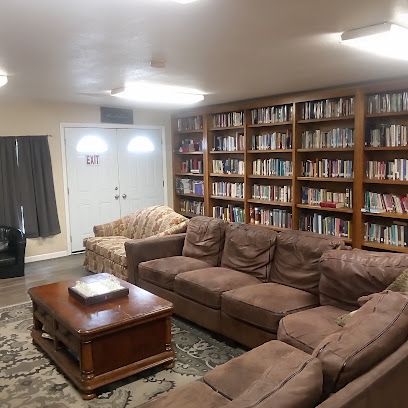
Oakland, CA
Substance use treatment · Does not use medication for opioid addiction · Substance abuse counseling
Accepts: Cash or self-payment
Pittsburg, CA
Substance use treatment · Accepts clients on opioid medication but prescribed elsewhere · Cognitive behavioral therapy
Accepts: Cash or self-payment
Sanger, CA
Substance use treatment · Does not treat opioid addiction · Cognitive behavioral therapy
Accepts: Cash or self-payment
Santa Rosa, CA
Substance use treatment · Does not treat opioid addiction · Cognitive behavioral therapy
Accepts: Cash or self-payment, Private health insurance

Santa Rosa, CA
Accepts clients on opioid medication but prescribed elsewhere · Substance abuse counseling · Smoking not permitted
Accepts: Cash or self-payment
Palo Alto, CA
Substance use treatment · Accepts clients on opioid medication but prescribed elsewhere · Substance abuse counseling
Accepts: Cash or self-payment, Medicaid
Los Angeles, CA
Substance use treatment · Accepts clients on opioid medication but prescribed elsewhere · Cognitive behavioral therapy
Accepts: Cash or self-payment, Medicaid
Oceanside, CA
Substance use treatment · Accepts clients on opioid medication but prescribed elsewhere · Cognitive behavioral therapy
Accepts: Cash or self-payment, Medicaid
San Francisco, CA
Substance use treatment · Accepts clients on opioid medication but prescribed elsewhere · Cognitive behavioral therapy
Accepts: Cash or self-payment, Medicaid
Fortuna, CA
Substance use treatment · Does not treat opioid addiction · Cognitive behavioral therapy
Accepts: Cash or self-payment
Los Angeles, CA
Substance use treatment · Does not treat opioid addiction · Cognitive behavioral therapy
Accepts: Medicaid, Medicare, State-financed health insurance plan other than Medicaid
Canoga Park, CA
Substance use treatment · Does not treat opioid addiction · Substance abuse counseling
Accepts: Cash or self-payment, Sliding fee scale, Active duty military
Modesto, CA
Substance use treatment · Accepts clients on opioid medication but prescribed elsewhere · Smoking permitted in designated area
Accepts: Cash or self-payment, Active duty military, Military families
Whittier, CA
Substance use treatment · Does not treat opioid addiction · Substance abuse counseling
Accepts: Cash or self-payment
Eureka, CA
Substance use treatment · Does not treat opioid addiction · Cognitive behavioral therapy
Accepts: Cash or self-payment
Pasadena, CA
Substance use treatment · Accepts clients on opioid medication but prescribed elsewhere · Cognitive behavioral therapy
Accepts: Cash or self-payment
Our sponsored hotline can help you compare treatment options and next steps.
California carries more addiction-treatment infrastructure than any other state, and it is spread unevenly across a place that runs from coastal metros to agricultural valleys to desert counties. Two patterns shape access here. Along the Orange County coast — Costa Mesa most visibly — a dense cluster of private residential programs earned the nickname the "Rehab Riviera," and Malibu adds its own concentration of high-end facilities that draw clients from across the country. Inland, in Central Valley cities such as Fresno and Bakersfield, residents often contend with longer travel and fewer nearby options.
California also runs Medi-Cal, its version of Medicaid, and has positioned itself as a harm-reduction leader: naloxone, the medication that reverses an opioid overdose, is available at many pharmacies without an individual prescription, and the state maintains a statewide naloxone standing order to widen access (California Department of Public Health). The state's overdose picture is now driven heavily by fentanyl, which was involved in 7,137 overdose deaths in 2023 — about 91% of California's opioid-related overdose deaths (CDPH, 2023). That range means real choice, but also a reason to look past marketing and setting. Do your research, ask questions, and tour a facility before you commit — you are your own best advocate.
Sober Nation lists 1,515 treatment centers across California — the largest inventory of any state in our directory. They cluster where the population and the private-pay market do. Los Angeles leads with 103 listed centers, followed by San Diego (49), Costa Mesa (41), San Francisco (38), Long Beach (28), Santa Ana (27), Fresno (25), Malibu (25), Bakersfield (24), and San Jose (24). A few of those names are telling: Costa Mesa and Malibu are comparatively small cities, yet they rank near the top, which reflects the coastal concentration of private residential care rather than local demand alone. Large Central Valley cities, by contrast, show fewer listings relative to their populations — a rough proxy for the access gap between coastal and inland California.
These directory counts describe supply, not need. An estimated 5.6 million Californians aged 12 and older — about 17% — met the criteria for a past-year substance use disorder in 2022–2023, and roughly 81% of those classified as needing substance use treatment did not receive it (SAMHSA NSDUH, 2022–2023). In 2023, California recorded 11,359 drug overdose deaths — an age-adjusted rate of 29.4 per 100,000 residents — and 69% involved an opioid; fentanyl alone was involved in 7,137 deaths, about 91% of the state's opioid-related overdose deaths (CDPH, 2023).
Treatment is organized into levels of care, and most people pass through more than one. The percentages below show how common each level is among California's listed centers.
There is no single right starting point. It really goes on a case-by-case basis, and a proper clinical assessment should match the level of care to your situation rather than the other way around.
Cost is often the deciding factor, and California's listed centers span a wide range. About 51% accept Medicaid — in California that program is Medi-Cal, which covers substance use disorder treatment for eligible low-income residents (California DHCS). Roughly 24% accept Medicare, which matters for adults 65 and older and some younger people with disabilities. Many facilities also work with private insurance, and federal and state parity rules generally require plans that cover behavioral health to do so on par with medical and surgical care (federal MHPAEA, U.S. Department of Labor).
Actual prices vary enormously — a luxury coastal residential program can cost many times what an outpatient or county-funded program charges. Before you enroll, confirm precisely what your plan covers, ask for the total out-of-pocket estimate, and have the facility verify your benefits in writing. If you are uninsured, do not assume treatment is out of reach: ask about sliding-scale fees, county behavioral health programs, and whether you qualify for Medi-Cal. You are entitled to clear answers before signing anything.
A few California-specific resources are worth bookmarking. The state's SAMHSA-designated Single State Agency for substance use services is the California Department of Health Care Services (DHCS), which administers Medi-Cal behavioral health benefits and points residents to county treatment programs. NAMI California, the state chapter of the National Alliance on Mental Illness, offers education, support groups, and a warmline for families dealing with co-occurring mental health and substance use conditions. The 988 Suicide & Crisis Lifeline connects anyone in California to trained crisis counselors by phone or text, 24/7, including help during substance use crises. Your county behavioral health department is also a practical entry point for public and Medi-Cal-funded care, often through a 24-hour access line. When you are not sure where to begin, start with your county or 988.