Brewer Medical Center
Brewer, ME
- Outpatient
- MAT
Substance use treatment · Cognitive behavioral therapy · Dialectical behavior therapy
Accepts: Cash or self-payment, Medicaid, Medicare


Find a free or private addiction rehab center in Maine. Use our search-by-city tool to find recovery near you.
177 centers found (1–20)
Brewer, ME
Substance use treatment · Cognitive behavioral therapy · Dialectical behavior therapy
Accepts: Cash or self-payment, Medicaid, Medicare
Winterport, ME
Substance use treatment · Cognitive behavioral therapy · Dialectical behavior therapy
Accepts: Cash or self-payment, Medicaid, Medicare

Rockport, ME
Substance use treatment · Cognitive behavioral therapy · Dialectical behavior therapy
Accepts: Cash or self-payment, Medicaid, Medicare
Bangor, ME
Substance use treatment · Cognitive behavioral therapy · Dialectical behavior therapy
Accepts: Cash or self-payment, Medicaid, Medicare

Bridgton, ME
Substance use treatment · Accepts clients on opioid medication but prescribed elsewhere · Cognitive behavioral therapy
Accepts: Cash or self-payment, Medicaid, State-financed health insurance plan other than Medicaid
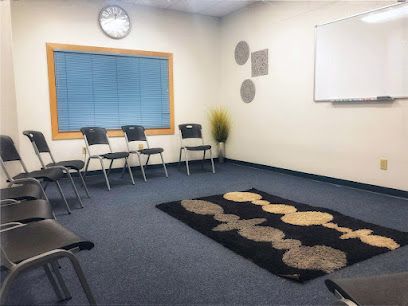
Portland, ME
Substance use treatment · Cognitive behavioral therapy · Dialectical behavior therapy
Accepts: Cash or self-payment, Private health insurance, Active duty military
Bangor, ME
Substance use treatment · Cognitive behavioral therapy · Dialectical behavior therapy
Accepts: Cash or self-payment, Medicaid, Medicare
Augusta, ME
Substance use treatment · Cognitive behavioral therapy · Dialectical behavior therapy
Accepts: Cash or self-payment, Medicaid, Sliding fee scale
Old Town, ME
Substance use treatment · Cognitive behavioral therapy · Substance abuse counseling
Accepts: Medicaid, Medicare, State-financed health insurance plan other than Medicaid

Brunswick, ME
Substance use treatment · Cognitive behavioral therapy · Dialectical behavior therapy
Accepts: Cash or self-payment, Medicaid, Medicare
Presque Isle, ME
Substance use treatment · Accepts clients on opioid medication but prescribed elsewhere · Cognitive behavioral therapy
Accepts: Cash or self-payment, Medicaid, State-financed health insurance plan other than Medicaid
Madawaska, ME
Substance use treatment · Accepts clients on opioid medication but prescribed elsewhere · Cognitive behavioral therapy
Accepts: Cash or self-payment, Medicaid, State-financed health insurance plan other than Medicaid
Houlton, ME
Substance use treatment · Accepts clients on opioid medication but prescribed elsewhere · Cognitive behavioral therapy
Accepts: Cash or self-payment, Medicaid, Private health insurance

Damariscotta, ME
Substance use treatment · Cognitive behavioral therapy · Dialectical behavior therapy
Accepts: Cash or self-payment, Medicaid, Medicare
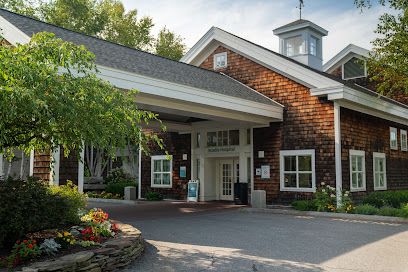
Bangor, ME
Substance use treatment · SAMHSA-certified Opioid Treatment Program · Cognitive behavioral therapy
Accepts: Cash or self-payment, Medicaid, Medicare
Caribou, ME
Substance use treatment · Accepts clients on opioid medication but prescribed elsewhere · Cognitive behavioral therapy
Accepts: Cash or self-payment, Medicaid, Private health insurance
Rumford, ME
Substance use treatment · Accepts clients on opioid medication but prescribed elsewhere · Cognitive behavioral therapy
Accepts: Cash or self-payment, Medicaid, State-financed health insurance plan other than Medicaid
Belfast, ME
Substance use treatment · Cognitive behavioral therapy · Dialectical behavior therapy
Accepts: Cash or self-payment, Medicaid, Medicare
Portland, ME
Substance use treatment · Cognitive behavioral therapy · Dialectical behavior therapy
Accepts: Cash or self-payment, Private health insurance, Sliding fee scale
Fort Kent, ME
Substance use treatment · Accepts clients on opioid medication but prescribed elsewhere · Cognitive behavioral therapy
Accepts: Cash or self-payment, Medicaid, Private health insurance
Our sponsored hotline can help you compare treatment options and next steps.
Maine's treatment picture is shaped by geography more than almost any other state's. As one of the most rural states in the country by share of population — roughly 61% of Mainers live in rural areas, the second-highest share of any state behind only Vermont — recovery here often means long drives down two-lane roads to reach a provider, and care that has to come to people rather than the other way around. That reality runs through the state's 177 listed treatment centers: they concentrate in Portland, Bangor, and the Augusta-Lewiston corridor, then thin quickly as you move north toward Aroostook County or east into Down East communities like Calais on the New Brunswick border.
The state has used policy to narrow that gap. Maine voters approved MaineCare — the state's Medicaid program — expansion by ballot referendum in 2017, and the state began enrolling newly eligible low-income adults in January 2019, extending coverage to tens of thousands of people, which bears directly on how people here pay for treatment. If you or a loved one is weighing options, access is genuinely broader than it was a decade ago, even if the map still asks a lot of you. There is no single right place to start, and recovery is possible. Help is closer than it can feel.
Sober Nation lists 177 treatment centers across Maine, and they cluster where the population does. Portland leads with 17 listed centers, followed by Bangor with 15, then Augusta and Lewiston with 11 each, and South Portland with 8. Below those sit a set of smaller regional hubs: Rockland and Ellsworth with 6 each, Skowhegan and Waterville with 5 each, and Calais with 4 anchoring the eastern border. These counts reflect centers that list with Sober Nation and are a starting map, not a full census of every provider operating in the state.
The care on offer skews heavily toward community-based, outpatient models. 91% of listed centers provide outpatient services and 90% provide aftercare, while only 7% offer medical detox and 10% offer residential beds. Medication-assisted treatment is available at 32% of centers — a meaningful footprint given the scale of Maine's opioid problem, though it still leaves two-thirds of listed programs without it.
Statewide prevalence and the gap between the people who need treatment and those who actually receive it are tracked in federal and state data rather than in these listings. In SAMHSA's 2022–2023 National Survey on Drug Use and Health, about one in five Maine residents aged 12 or older (20.4%) met the criteria for a past-year substance use disorder, yet roughly 76% of Mainers classified as needing substance use treatment did not receive it. Maine's drug overdose deaths, by contrast, have been falling: the state recorded a 16% decline in fatal overdoses in 2023 — among the largest drops in the nation — and deaths continued to decrease in 2024, according to the Maine Drug Data Hub.
Where you start depends on how severe use has become and whether stopping is medically risky. Detox — the supervised management of withdrawal — is the narrowest tier in Maine, offered by just 7% of listed centers, so if you need medically supervised withdrawal from alcohol or opioids, expect to call ahead and possibly travel to reach a bed. Residential, or inpatient, care, where you live on-site for the length of treatment, is similarly limited at 10%, and those beds fill; a waitlist is common.
The overwhelming majority of Maine care is outpatient (91%): you attend scheduled sessions while living at home, which is the practical default for most people and, in the more rural parts of the state, often the only option within a reasonable drive. Outpatient itself ranges from a weekly counseling hour to intensive day programs, so ask where a given center actually falls before you assume it is the right fit. Medication-assisted treatment (32%) pairs an FDA-approved medication such as buprenorphine or methadone with counseling, and it is a frontline standard of care for opioid use disorder. Aftercare (90%) — the ongoing support that follows formal treatment — is nearly universal here, and it is frequently what protects the progress you have already made.
For most Mainers, the first practical question is which insurance a center accepts — and here the numbers lean in your favor. 90% of listed Maine centers accept MaineCare, the state's Medicaid program, and 53% accept Medicare, which matters in a state with one of the older populations in the country. Because Maine expanded Medicaid eligibility, many low-income adults who once fell into a coverage gap now qualify for MaineCare, which covers substance use disorder treatment for eligible members. Federal parity law — the Mental Health Parity and Addiction Equity Act (MHPAEA) — also requires most health plans to cover behavioral health comparably to medical and surgical care, though what that means for your specific out-of-pocket cost still varies plan to plan and service to service.
If you are uninsured or underinsured, ask centers directly about sliding-scale fees and state-funded treatment slots — availability shifts month to month, and a program that cannot take you may know one that can. Do your research, ask what treatment will actually cost before you commit to it, and remember that you are your own best advocate.
A few Maine-specific places to start if you are not sure where to turn. The state's SAMHSA-designated Single State Agency for substance use services is the Maine Department of Health and Human Services, Office of Behavioral Health, which oversees publicly funded prevention, treatment, and recovery services and can point you toward licensed providers. NAMI Maine, the state chapter of the National Alliance on Mental Illness, runs a HelpLine along with education and support groups for individuals and families alike — valuable given how often substance use and mental health conditions travel together. And if you or someone you love is in crisis right now, the 988 Suicide & Crisis Lifeline is available 24 hours a day by call or text, and Maine's own crisis services connect to it. You do not have to sort any of this out alone.