

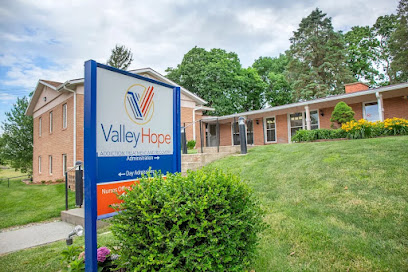
At a Glance
Primary Focus
Treatment Settings
Treatment Approaches
Special Programs
About Valley Hope Of Atchison
Valley Hope of Atchison is a full-spectrum addiction treatment and recovery center in Atchison, Kansas, offering medical detox through residential treatment, outpatient programs, and ongoing alumni support. Operating 24 hours a day since 1967, it serves men, women, and veterans navigating substance abuse treatment and co-occurring disorders across every stage of the recovery journey.
Valley Hope of Atchison sits at 1816 North 2nd Street in Atchison, Kansas, and has been part of the Valley Hope Association network since 1967 — one of the longer-standing nonprofit addiction treatment organizations in the Midwest. For individuals and families researching a recovery center that covers the full continuum of care, this facility represents a substantive option, not simply a short-term stabilization stop. The center treats substance use disorders alongside co-occurring mental health conditions, and its 24-hour operating schedule means access is never gated by business hours.
The levels of care at Valley Hope of Atchison span the entire treatment spectrum. Medical detox provides medically supervised withdrawal management as the clinical starting point. From there, residential treatment offers structured, immersive programming for those who need to step away from their daily environment to focus on recovery. A Partial Hospitalization Program (PHP) and outpatient program serve people transitioning out of residential care or those whose circumstances call for a less intensive setting from the start. Telehealth services extend treatment access beyond the facility walls, supporting continuity of care for people managing work, family, or distance.
The clinical approach at Valley Hope of Atchison draws on Cognitive Behavioral Therapy (CBT) and Medication-Assisted Treatment (MAT), addressing both the behavioral patterns and the physiological dimensions of addiction. Spiritual care is integrated as a facility feature for those who want it, reflecting a program that acknowledges recovery as something larger than symptom management. The center holds accreditations from NAATP and LegitScript, markers that the organization meets recognized standards for ethical treatment advertising and program quality.
Valley Hope of Atchison specifically serves men, women, and veterans — a population focus that shapes how programs are structured and delivered. Veterans' treatment needs, including the intersection of service-related experiences and substance use, are part of the center's scope, and TRICARE is accepted alongside private insurance and self-pay. Aftercare does not end at discharge; alumni services and ongoing recovery support are built into what the center offers, giving people a community to return to long after formal treatment concludes.
A Full Continuum of Addiction Treatment in Atchison, Kansas
Valley Hope of Atchison offers one of the more complete continuums of substance abuse treatment available in northeastern Kansas. Medical detox, residential treatment, a Partial Hospitalization Program, outpatient programming, and telehealth services are all offered under the same organizational roof — meaning that as clinical needs shift over the course of recovery, people can move between levels of care without losing the thread of their treatment relationship.
This matters for anyone planning longer-term recovery rather than a single acute episode. The transition from residential treatment to an outpatient program, or from PHP to telehealth-supported aftercare, is a critical period when many people lose ground. Having those steps connected within one recovery center reduces the friction of that transition significantly.
Treatment Approaches: CBT, MAT, and Spiritual Care
The therapeutic backbone at Valley Hope of Atchison includes Cognitive Behavioral Therapy (CBT), which helps people identify and restructure the thought patterns that sustain addictive behavior, and Medication-Assisted Treatment (MAT), which addresses the neurological dimensions of dependence. Together, these approaches reflect a program that treats the whole picture of addiction rather than isolating one dimension of it.
Spiritual care is also available as part of the facility's programming — not as a requirement, but as an option for those for whom it is meaningful. This reflects a longer tradition within Valley Hope's organizational philosophy, and it positions the center for people who want their recovery to connect with something beyond the clinical.
Aftercare, Alumni Services, and the Recovery Community
Completing a residential treatment or outpatient program is not the end of what Valley Hope of Atchison offers. Alumni services and recovery support are confirmed components of the center's aftercare structure, providing a pathway for people to stay connected to a recovery community after formal treatment concludes. For many people in long-term recovery, that ongoing connection is one of the most important factors in sustained sobriety.
Family members and loved ones researching recovery centers should weigh aftercare infrastructure heavily — it is often the difference between treatment as a temporary event and recovery as a lasting condition. Valley Hope of Atchison's alumni services represent a tangible commitment to the post-treatment phase of the recovery journey.
Veterans and Specialized Populations at Valley Hope of Atchison
Valley Hope of Atchison specifically names veterans among the populations it serves, and the center accepts TRICARE — the federal health insurance program for military members, retirees, and their families. For veterans seeking addiction treatment or substance abuse treatment, finding a program that understands the specific context of military service and accepts their insurance is not always straightforward. This center addresses both.
The facility also serves men and women, and its dual diagnosis capacity means that co-occurring mental health conditions are treated alongside substance use disorders rather than deferred to a separate system. For veterans in particular, where the overlap between service-related mental health challenges and substance use is well-documented, this integrated approach carries real clinical significance.
Why Choose Valley Hope Of Atchison
- Unbroken continuum from medical detox through residential treatment, PHP, outpatient, and telehealth — all at one recovery center
- Dedicated services for veterans, with TRICARE accepted as a payment option
- Alumni services and ongoing recovery support built into the program, not added as an afterthought
- Dual diagnosis treatment for co-occurring disorders, integrating CBT and MAT within the same program
- Operating 24 hours a day, every day — admission and support are not confined to office hours
Frequently Asked Questions
What levels of care does Valley Hope of Atchison offer for addiction treatment?
Valley Hope of Atchison provides medical detox, residential treatment, a Partial Hospitalization Program (PHP), an outpatient program, and telehealth services. This full continuum means the center can support people from the earliest stages of withdrawal management through longer-term recovery programming. Telehealth extends that support to people who need flexibility in how they access care.
Does Valley Hope of Atchison treat co-occurring mental health conditions?
Yes. The center treats co-occurring disorders and dual diagnosis, meaning substance use and mental health conditions are addressed together within the same program. This is particularly relevant for individuals whose addiction intersects with anxiety, depression, trauma, or other mental health challenges. Integrated treatment at a single recovery center avoids the gaps that can open when these needs are handled separately.
Does Valley Hope of Atchison offer medical detox?
Medical detox is one of the confirmed levels of care at Valley Hope of Atchison. The facility operates 24 hours a day, which supports around-the-clock monitoring during the detox and withdrawal management phase. From medical detox, people can transition into residential treatment or other levels of care within the same facility.
Does Valley Hope of Atchison serve veterans?
Veterans are among the specific populations Valley Hope of Atchison serves. The center also accepts TRICARE, making it an accessible option for veterans and active-duty military members who carry that coverage. Dual diagnosis treatment is available, which is relevant for veterans dealing with both substance use and service-connected mental health conditions.
What payment options are accepted at Valley Hope of Atchison?
The center accepts private insurance, TRICARE, and self-pay or cash. Veterans and military families with TRICARE coverage can use that benefit directly. Those without insurance or who prefer to pay privately have a self-pay option available as well.
What happens after completing a program at Valley Hope of Atchison?
Valley Hope of Atchison offers alumni services and ongoing recovery support as part of its aftercare structure. These services help people maintain connection to a recovery community after formal treatment ends. Staying engaged with a sober network and recovery support system is one of the more well-supported factors in long-term sobriety.
What therapeutic approaches does Valley Hope of Atchison use?
The center's confirmed therapeutic methods include Cognitive Behavioral Therapy (CBT) and Medication-Assisted Treatment (MAT). CBT addresses the behavioral and cognitive patterns that sustain addiction, while MAT supports the physiological aspects of dependence. Spiritual care is also available as a facility feature for those who want it as part of their recovery.
Is Valley Hope of Atchison accredited?
Valley Hope of Atchison holds accreditations from NAATP (National Association of Addiction Treatment Providers) and LegitScript. NAATP membership reflects adherence to recognized standards in addiction treatment. LegitScript certification signals that the center meets requirements for transparent and ethical advertising of treatment services.
Can I access treatment at Valley Hope of Atchison through telehealth?
Telehealth is a confirmed level of care at Valley Hope of Atchison. This extends the center's outpatient programming to people who may not be able to attend in person consistently — whether due to distance, work, family obligations, or a transition out of residential care. Telehealth supports continuity of care during the ongoing recovery phase.
What is the difference between the PHP and outpatient program at Valley Hope of Atchison?
A Partial Hospitalization Program (PHP) is a higher intensity level of outpatient care, typically involving more hours of structured programming per week than a standard outpatient program. Both are offered at Valley Hope of Atchison, allowing the center to match the level of care to where someone is in their recovery. PHP is often used as a step-down from residential treatment before transitioning to a less intensive outpatient program.
Nearby Treatment Centers
Guidance Center Atchison
Atchison, KS
- Outpatient
- MAT
Substance use treatment · Cognitive behavioral therapy · Dialectical behavior therapy
Accepts: Cash or self-payment, Medicaid, Medicare
Guidance Center
Leavenworth, KS
- Outpatient
- MAT
Substance use treatment · Cognitive behavioral therapy · Dialectical behavior therapy
Accepts: Cash or self-payment, Medicaid, Medicare

VA Eastern Kansas Healthcare System Addiction Treatment Program LVN
Leavenworth, KS
- Detox
- Residential
- IOP
- MAT
Substance use treatment · Cognitive behavioral therapy · Dialectical behavior therapy
Accepts: Cash or self-payment, Medicaid, Medicare

Guidance Center
Oskaloosa, KS
- Outpatient
- MAT
Substance use treatment · Cognitive behavioral therapy · Dialectical behavior therapy
Accepts: Cash or self-payment, Medicaid, Medicare
Mirror Inc Hiawatha
Hiawatha, KS
- Outpatient
- MAT
Substance use treatment · Accepts clients on opioid medication but prescribed elsewhere · Cognitive behavioral therapy
Accepts: Cash or self-payment, Medicaid, Private health insurance
Mirror Inc Wyandote County Residential and Outpt
Kansas City, KS
- Residential
- IOP
- MAT
Substance use treatment · Accepts clients on opioid medication but prescribed elsewhere · Cognitive behavioral therapy
Accepts: Cash or self-payment, Medicaid, Private health insurance