

At a Glance
Primary Focus
Treatment Settings
Treatment Approaches
About UPMC Mckeesport Hosptial
UPMC McKeesport Hospital offers medical detox, residential treatment, and an outpatient program for adults seeking recovery in McKeesport, PA. Accredited by CARF and certified as an Opioid Treatment Program, this substance use treatment facility serves a broad range of populations — including veterans, young adults, seniors, and individuals managing co-occurring disorders — with Cognitive Behavioral Therapy at the core of care.
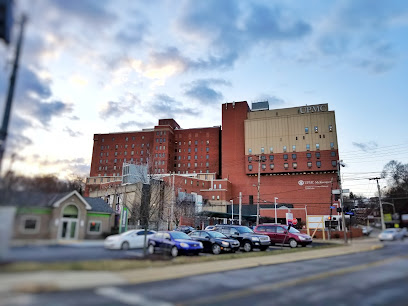
UPMC McKeesport Hospital, located at 1500 5th Avenue in McKeesport, Pennsylvania, operates as a full-spectrum substance use treatment facility within the UPMC health system. Situated in Allegheny County, it holds CARF accreditation — a recognized benchmark for quality in rehabilitation services — and carries an Opioid Treatment Program (OTP) certification, distinguishing it from many community treatment options in the region. For individuals and families evaluating a long-term recovery partner rather than a one-time intervention, this facility offers a structured continuum of care under a trusted hospital umbrella.
The facility provides three distinct levels of care: medical detox, residential treatment, and an outpatient program. This continuum means that someone entering recovery can move from medically supervised withdrawal management into residential treatment and then step down into an outpatient program as stability grows — rather than being transferred between unconnected providers. That continuity matters for people building a durable recovery, not just clearing an immediate crisis.
Cognitive Behavioral Therapy (CBT) is the confirmed therapeutic method in use, a structured, skills-based approach that helps individuals identify and change the thought patterns driving substance use. The facility also addresses trauma and PTSD alongside addiction, and offers dual diagnosis treatment for those managing co-occurring mental health conditions — an important capability for anyone whose substance use is intertwined with underlying psychiatric needs.
UPMC McKeesport serves a notably wide range of populations: veterans, young adults between 18 and 25, seniors and older adults, men, women, individuals requiring HIV/AIDS support, and those who are deaf or hard of hearing. Payment options include Medicaid, Medicare, TRICARE, private insurance, state insurance, and self-pay, making access realistic across a range of financial circumstances. For those navigating recovery in the greater McKeesport area, the combination of CARF accreditation, OTP certification, dual diagnosis capability, and a full care continuum sets this facility apart as a serious, long-term recovery resource.
A Continuum of Care for Lasting Recovery
Recovery is rarely a single event — it is a process that unfolds across weeks, months, and sometimes years. UPMC McKeesport Hospital is structured to meet people at different points in that process. The facility offers medical detox for those entering the early, physically demanding stage of withdrawal, residential treatment for those who need sustained, immersive support, and an outpatient program for individuals ready to rebuild daily life while maintaining therapeutic structure.
Having all three levels of care within the same system matters. It means a person's treatment team can plan transitions deliberately rather than handing someone a referral and hoping the next provider has space. For families watching a loved one navigate recovery, that kind of coordinated, sustained care offers a degree of stability that single-service facilities cannot provide.
Dual Diagnosis Treatment and Trauma-Informed Care
UPMC McKeesport addresses co-occurring disorders — situations where addiction and a mental health condition such as depression, anxiety, or trauma-related illness exist together. For many people in long-term recovery, untreated co-occurring conditions are a primary relapse driver. The facility's confirmed treatment of trauma and PTSD alongside substance use disorders reflects an understanding that these issues are frequently inseparable.
Cognitive Behavioral Therapy (CBT) provides the clinical backbone of the therapeutic work here. CBT is a structured method that helps individuals examine how their thoughts, beliefs, and behavioral patterns contribute to substance use — and develop practical tools for changing those patterns. It is one of the most extensively studied approaches in addiction treatment, and its presence in a hospital-based setting like UPMC McKeesport connects it to broader clinical oversight and accountability.
Who UPMC McKeesport Serves
The facility is designed to serve a genuinely broad population. Veterans and active-duty-connected individuals will find that TRICARE is an accepted payment method alongside Medicare, Medicaid, private insurance, state insurance, and self-pay options. Young adults between 18 and 25, seniors and older adults, men, and women are all explicitly listed as populations served — meaning the facility has experience working across life stages and not only with a narrow demographic.
UPMC McKeesport also serves individuals needing HIV/AIDS support and those who are deaf or hard of hearing, extending access to populations that frequently face barriers in finding appropriate addiction treatment. For families researching a recovery center that can meet their loved one where they are — medically, financially, and personally — this range of accommodations is worth factoring into the decision.
Accreditation, Certification, and Payment Access
UPMC McKeesport carries CARF accreditation, a designation from the Commission on Accreditation of Rehabilitation Facilities that requires facilities to meet documented standards for quality and program effectiveness. It is not a given — many treatment programs operate without it — and its presence here signals a level of external accountability that matters when evaluating a long-term recovery partner.
The facility is also certified as an Opioid Treatment Program (OTP) by the relevant federal authority, a distinct certification for programs providing opioid-specific treatment services. On the financial side, the acceptance of Medicaid, Medicare, TRICARE, private insurance, state insurance, and self-pay options means that cost alone is less likely to be the barrier that prevents someone from accessing this level of care. Individuals and families are encouraged to contact the facility directly at (412) 664-2000 or via [email protected] to discuss specific coverage and program fit.
Why Choose UPMC Mckeesport Hosptial
- Full continuum of care — medical detox through outpatient program — under one CARF-accredited provider, reducing the disruption of transitioning between facilities during recovery
- Certified Opioid Treatment Program (OTP), a formal federal-level certification that distinguishes the facility for opioid-specific recovery needs
- Dual diagnosis and trauma/PTSD treatment integrated into substance use care, addressing the whole picture rather than addiction in isolation
- Explicitly serves veterans and accepts TRICARE, making it a concrete option for military-connected individuals and families seeking addiction treatment
- Accessible to deaf and hard-of-hearing individuals, a population frequently underserved by addiction treatment providers
Frequently Asked Questions
What levels of care does UPMC McKeesport offer for addiction treatment?
UPMC McKeesport provides three levels of care: medical detox, residential treatment, and an outpatient program. This continuum allows individuals to move through different stages of recovery within the same system, from initial withdrawal management through longer-term residential and outpatient support.
Is UPMC McKeesport accredited for addiction and substance use treatment?
Yes. UPMC McKeesport holds CARF accreditation — issued by the Commission on Accreditation of Rehabilitation Facilities — which reflects an external review of the facility's quality and program standards. It is also certified as an Opioid Treatment Program (OTP).
Does UPMC McKeesport treat co-occurring mental health conditions alongside addiction?
Yes. The facility provides treatment for co-occurring disorders and dual diagnosis, as well as trauma and PTSD. For individuals whose substance use is connected to underlying mental health conditions, this integrated approach addresses both simultaneously rather than treating them in sequence.
What therapeutic approaches are used in the recovery program at UPMC McKeesport?
Cognitive Behavioral Therapy (CBT) is the confirmed therapeutic method used at UPMC McKeesport. CBT is a structured, skills-focused approach that helps individuals recognize and change the thought and behavior patterns that contribute to substance use.
Does UPMC McKeesport serve veterans seeking addiction treatment?
Yes. Veterans are among the explicitly served populations at UPMC McKeesport. The facility also accepts TRICARE, making it a viable option for veterans and military-connected individuals navigating insurance coverage for rehab and substance use treatment.
What insurance and payment options does UPMC McKeesport accept?
UPMC McKeesport accepts Medicaid, Medicare, TRICARE, private insurance, state insurance, and self-pay or cash. For questions about a specific plan or coverage situation, contacting the facility directly at (412) 664-2000 or [email protected] is the best step.
Does UPMC McKeesport offer an outpatient program for people in ongoing recovery?
Yes. An outpatient program is part of the confirmed levels of care at UPMC McKeesport. This allows individuals who have completed residential treatment — or who are appropriate for outpatient care from the start — to continue structured treatment while living in the community.
Does UPMC McKeesport have services for deaf or hard-of-hearing individuals?
Yes. UPMC McKeesport is confirmed to serve individuals who are deaf or hard of hearing, a population that frequently encounters barriers at addiction treatment facilities. Contact the facility directly for details about specific accommodations.
What populations does UPMC McKeesport's substance abuse treatment program serve?
The facility serves a broad range of populations including veterans, young adults ages 18 to 25, seniors and older adults, men, women, individuals needing HIV/AIDS support, and those who are deaf or hard of hearing. This range makes it a realistic option across different life stages and circumstances.
How do I contact UPMC McKeesport to learn more about their rehab programs?
UPMC McKeesport can be reached by phone at (412) 664-2000 or by email at [email protected]. The facility is located at 1500 5th Avenue, McKeesport, PA 15132, and more information is available at upmc.com.
Nearby Treatment Centers
Mon Yough Community Services Addiction Trt and Intervention Servs
McKeesport, PA
- PHP
- IOP
- MAT
Substance use treatment · Accepts clients on opioid medication but prescribed elsewhere · Cognitive behavioral therapy
Accepts: Cash or self-payment, Medicaid, State-financed health insurance plan other than Medicaid
Auberle
McKeesport, PA
- Outpatient
Substance use treatment · Accepts clients on opioid medication but prescribed elsewhere · Cognitive behavioral therapy
Accepts: Cash or self-payment, Medicaid, Private health insurance
Gateway Rehab CeCes Place
Braddock, PA
- Residential
- Sober Living
Substance use treatment · Accepts clients on opioid medication but prescribed elsewhere · Cognitive behavioral therapy
Accepts: Cash or self-payment, Medicaid

Resources for Human Development CORE
Homestead, PA
- Residential
- MAT
Substance use treatment · Cognitive behavioral therapy · Dialectical behavior therapy
Accepts: Medicaid, State-financed health insurance plan other than Medicaid, Military families
Program for Offenders West Homestead Center (Female)
Homestead, PA
- Residential
- MAT
- Sober Living
Substance use treatment · Accepts clients on opioid medication but prescribed elsewhere · Cognitive behavioral therapy
Accepts: Cash or self-payment, Medicaid, Medicare
POWER House
Pittsburgh, PA
- Residential
- MAT
- Sober Living
Substance use treatment · Accepts clients on opioid medication but prescribed elsewhere · Cognitive behavioral therapy
Accepts: Cash or self-payment, Medicaid, State-financed health insurance plan other than Medicaid