

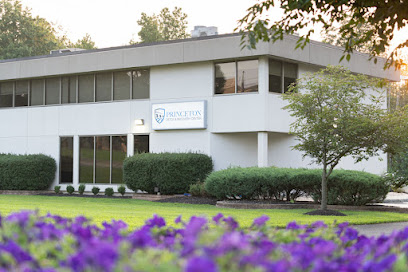
At a Glance
Location
4287 U.S. 1, Monmouth Junction, NJ 8852
Phone
609-554-5389Primary Focus
Treatment Settings
Treatment Approaches
About Princeton Detox and Recovery Center
Princeton Detox and Recovery Center in Monmouth Junction, NJ offers a full continuum of care — from medical detox through residential treatment, PHP, IOP, and an alumni program — for adults seeking structured, long-term addiction treatment and recovery support. The center accepts most major private insurance plans and operates 24 hours a day.
Princeton Detox and Recovery Center is a substance use treatment facility located at 4287 U.S. Highway 1 in Monmouth Junction, New Jersey, serving men and women — including individuals who are Deaf or Hard of Hearing — through a full spectrum of addiction treatment and recovery services. Situated in Middlesex County, the center is reachable around the clock at (609) 554-5389, reflecting a commitment to being available whenever someone is ready to take a step toward recovery.
The facility's continuum of care spans every major stage of the recovery process. Medical detox provides the clinical foundation for those entering treatment, followed by residential treatment for individuals who benefit from an immersive, structured environment. From there, a Partial Hospitalization Program (PHP) and an Intensive Outpatient Program (IOP) allow people to transition gradually back to everyday life while maintaining structured clinical support. Capping the continuum is a formal alumni program — a resource that keeps people connected to the recovery community well after active treatment ends.
Clinically, Princeton Detox and Recovery Center addresses more than substance use alone. The center treats co-occurring disorders and dual diagnosis, as well as trauma and PTSD, recognizing that lasting recovery often requires attention to underlying mental health conditions. Therapeutic methods include Cognitive Behavioral Therapy (CBT), individual therapy, group therapy, family therapy, and structured relapse prevention planning — a combination that supports both the person in treatment and the people closest to them. Continuing care planning is built into the process, not added as an afterthought.
Princeton Detox and Recovery Center serves men, women, and individuals who are Deaf or Hard of Hearing, with English-language services available. The clinical team is led by Chief Medical Officer Dr. Tamer Wassef (MD, CDS, ADM, ADP), Chief Administrative Officer Ross Donahue (LCSW, MCAP, CRRA), and Clinical Lead Alece Breig (MA, CADC, CAADC, CCS). The center accepts private insurance from carriers including Aetna, Anthem, Blue Cross Blue Shield, Horizon BCBS, Magellan Health, Amerihealth, CareFirst, and Molina, as well as self-pay arrangements. Medicaid and Medicare are not accepted.
A Full Continuum of Care: From Medical Detox to Alumni Support
One of the clearest ways Princeton Detox and Recovery Center stands apart is the breadth of its care continuum. Rather than focusing on a single point in the recovery process, the center offers medical detox, residential treatment, a Partial Hospitalization Program (PHP), an Intensive Outpatient Program (IOP), and a formal alumni program — all under one organizational roof. For someone planning a long-term recovery, that continuity matters: it means clinical relationships, records, and progress don't reset each time the level of care changes.
The step-down structure is designed to meet people where they are. Medical detox handles the clinical demands of early treatment, residential treatment offers a structured immersive setting, and PHP and IOP progressively reintroduce the demands of daily life while keeping therapeutic support close. The alumni program extends that support beyond the formal treatment period, creating a bridge into the broader recovery community. Continuing care after treatment is a stated part of what the center provides — not an optional add-on.
Treating the Whole Person: Dual Diagnosis and Trauma-Informed Care
Princeton Detox and Recovery Center formally treats co-occurring disorders and dual diagnosis, as well as trauma and PTSD. For many people entering addiction treatment, these are not secondary concerns — they are central to why substance use took hold and what makes sustained recovery possible. Addressing them within the same treatment setting, rather than routing clients elsewhere, is a meaningful clinical distinction.
The therapeutic methods on record reflect this broader scope: Cognitive Behavioral Therapy (CBT), individual therapy, group therapy, family therapy, and relapse prevention. CBT in particular is well-suited to the intersection of trauma, mental health, and substance use, helping people identify and reshape the thought patterns that drive harmful behavior. Family therapy acknowledges that addiction rarely affects only one person — and that recovery, done well, strengthens the entire support network around the individual.
Who Leads Care at Princeton Detox and Recovery Center
The leadership team at Princeton Detox and Recovery Center brings together medical, administrative, and clinical expertise. Dr. Tamer Wassef serves as Chief Medical Officer, holding credentials as an MD with specializations in Chemical Dependency (CDS), Addiction Medicine (ADM), and Addiction Psychiatry (ADP). Ross Donahue, Chief Administrative Officer, holds an LCSW, MCAP, and CRRA — a combination reflecting both clinical social work and addiction professional credentialing. Clinical Lead Alece Breig carries an MA, CADC, CAADC, and CCS, with certifications spanning alcohol and drug counseling at multiple levels.
Together, this team oversees a program that serves men, women, and individuals who are Deaf or Hard of Hearing. The center operates 24 hours a day, meaning clinical support and admissions assistance are available at any point — not just during business hours. For families weighing options, that round-the-clock availability is a practical reassurance during what is often an urgent and emotionally charged decision.
Insurance and Payment at Princeton Detox and Recovery Center
Princeton Detox and Recovery Center accepts private insurance from a broad range of major carriers, including Aetna, Anthem, Blue Cross Blue Shield, Horizon BCBS, Magellan Health, Amerihealth, CareFirst, and Molina. Self-pay and cash payment are also accepted. Medicaid and Medicare are not accepted at this facility, which is an important planning detail for families evaluating financial options before admission.
For those with private coverage, the range of accepted insurers represents most of the major plans found in the New Jersey and mid-Atlantic market. Verifying specific benefits and coverage levels directly with the center — reachable at (609) 554-5389 — is the most reliable way to understand what a particular plan will cover across detox, residential, PHP, IOP, and aftercare levels of care.
Why Choose Princeton Detox and Recovery Center
- Complete continuum from medical detox through residential treatment, PHP, IOP, and a structured alumni program — supporting recovery at every stage, not just the first week
- Formal alumni program and continuing care planning built into treatment, giving the recovery community a long-term connection point after discharge
- Dual diagnosis and trauma/PTSD treatment integrated into the clinical model, addressing co-occurring conditions alongside substance use
- Family therapy as a confirmed part of the therapeutic approach, supporting the whole household — not just the individual in treatment
- Inclusive access for Deaf and Hard of Hearing individuals, a population often underserved by addiction treatment centers
Frequently Asked Questions
What levels of care does Princeton Detox and Recovery Center offer?
The center offers a full continuum: medical detox, residential treatment, a Partial Hospitalization Program (PHP), an Intensive Outpatient Program (IOP), and a formal alumni program. This range allows individuals to progress through treatment stages without switching providers, which supports consistency in care throughout the recovery process.
Does Princeton Detox and Recovery Center treat co-occurring mental health conditions?
Yes. The center formally treats co-occurring disorders and dual diagnosis, as well as trauma and PTSD. These conditions are addressed alongside substance use treatment, rather than as a separate referral, which is particularly relevant for individuals whose mental health history is connected to their substance use.
What therapeutic approaches are used at this recovery center?
Confirmed therapeutic methods include Cognitive Behavioral Therapy (CBT), individual therapy, group therapy, family therapy, and relapse prevention planning. These approaches together address both the individual in treatment and the family system around them, and they extend into aftercare through the center's alumni program and continuing care planning.
Does Princeton Detox and Recovery Center have an alumni program?
Yes. An alumni program is a confirmed level of care at the facility, and continuing care after treatment is part of what the center provides. For people planning long-term recovery, the alumni program offers a structured connection to the recovery community after formal treatment concludes.
What insurance plans does Princeton Detox and Recovery Center accept?
The center accepts private insurance from Aetna, Anthem, Blue Cross Blue Shield, Horizon BCBS, Magellan Health, Amerihealth, CareFirst, and Molina. Self-pay and cash arrangements are also available. Medicaid and Medicare are not accepted at this facility.
Is Princeton Detox and Recovery Center open 24 hours?
Yes, the facility operates 24 hours a day. This means admissions support and clinical availability are not limited to standard business hours — families and individuals can reach the center at (609) 554-5389 at any time.
Who does Princeton Detox and Recovery Center serve?
The center serves men and women, including individuals who are Deaf or Hard of Hearing. It is a substance use treatment facility that also addresses co-occurring disorders and trauma, making it appropriate for adults whose recovery needs extend beyond substance use alone.
Does the center offer family therapy as part of its program?
Yes. Family therapy is a confirmed therapeutic method at Princeton Detox and Recovery Center. Involving family members in the treatment process is part of the clinical model, recognizing that recovery is often strengthened — or complicated — by the relationships surrounding the person in treatment.
Where is Princeton Detox and Recovery Center located?
The center is located at 4287 U.S. Highway 1 in Monmouth Junction, New Jersey, in Middlesex County. It can be reached by phone at (609) 554-5389 or online at princetondetox.com.
What is the difference between PHP and IOP at this facility?
Both are outpatient levels of care, but they differ in intensity. A Partial Hospitalization Program (PHP) typically involves more hours of structured clinical programming per week than an Intensive Outpatient Program (IOP). At Princeton Detox and Recovery Center, both are offered as part of a step-down continuum that follows medical detox and residential treatment, allowing clients to transition gradually while maintaining clinical support.
Nearby Treatment Centers
Penn Medicine Princeton House Behavioral Health/Princeton
Princeton, NJ
- PHP
- IOP
- MAT
Substance use treatment · Accepts clients on opioid medication but prescribed elsewhere · Cognitive behavioral therapy
Accepts: Cash or self-payment, Medicaid, Medicare
Penn Medicine Princeton House Behavioral Health
Princeton, NJ
- Detox
- MAT
Substance use treatment · Accepts clients on opioid medication but prescribed elsewhere · Cognitive behavioral therapy
Accepts: Cash or self-payment, Medicaid, Medicare
Counseling Center
Monmouth Junction, NJ
- PHP
- IOP
- MAT
Substance use treatment · Cognitive behavioral therapy · Dialectical behavior therapy
Accepts: Cash or self-payment, Private health insurance
Corner House Behavioral Health
Princeton, NJ
- IOP
Substance use treatment · Accepts clients on opioid medication but prescribed elsewhere · Cognitive behavioral therapy
Accepts: Cash or self-payment, Medicaid, Private health insurance
Daytop Village of NJ at Crawford House
Skillman, NJ
- Residential
- Sober Living
Substance use treatment · Accepts clients on opioid medication but prescribed elsewhere · Cognitive behavioral therapy

Summit Behavioral Health LLC
Princeton Junction, NJ
- PHP
- IOP
- MAT
Substance use treatment · Accepts clients on opioid medication but prescribed elsewhere · Cognitive behavioral therapy
Accepts: Cash or self-payment, Private health insurance, Military insurance