


At a Glance
Location
712 North Grand Traverse, Flint, MI 48503
Phone
810-249-9924Primary Focus
Treatment Settings
Treatment Approaches
Special Programs
About Holy Cross Services
Holy Cross Services in Saginaw, Michigan offers medical detox, outpatient, and intensive outpatient programs for adults navigating substance use and co-occurring disorders. CARF-accredited and certified as an Opioid Treatment Program, the center serves a wide range of populations — including pregnant women, seniors, and the Deaf and hard-of-hearing community — with Medicaid, Medicare, and most major insurance accepted.
Holy Cross Services is a CARF-accredited substance use treatment center located at 508 Shattuck Road in Saginaw, Michigan. Operating under the Victory Clinic name online, it holds certification as an Opioid Treatment Program (OTP), a designation that reflects a structured, clinically serious approach to opioid use disorder treatment. For those in Saginaw County exploring options for sustained recovery — not just crisis intervention — Holy Cross Services offers a continuum of care that stretches from medical detox through ongoing outpatient support.
The center provides three distinct levels of care: Medical Detox, a standard Outpatient Program, and an Intensive Outpatient Program (IOP). Medical detox gives individuals a clinically supervised start to their recovery before stepping into longer-term treatment. The IOP offers a more structured schedule than standard outpatient while allowing participants to maintain their lives outside the program — a setup well-suited to people building recovery around work, family, or community responsibilities.
Cognitive Behavioral Therapy (CBT) forms the therapeutic backbone of treatment at Holy Cross Services. The center also addresses trauma and PTSD alongside substance use, and carries a dual diagnosis designation, meaning clinicians are equipped to treat co-occurring mental health conditions alongside addiction. This integrated approach matters for the many people whose substance use is tangled up with underlying mental health challenges.
Holy Cross Services serves a notably broad population: men, women, pregnant women, seniors and older adults, and individuals who are Deaf or hard-of-hearing — a level of specificity that signals genuine commitment to accessibility. Payment options include Medicaid, Medicare, TRICARE, private insurance, state insurance, sliding-scale fees, self-pay, and financial assistance, making the program reachable for people across a wide range of financial situations. The center is open Monday through Friday, 8 AM to 4 PM.
From Medical Detox to Outpatient Recovery: The Continuum at Holy Cross Services
One of the practical realities of lasting recovery is that it rarely happens in a single step. Holy Cross Services structures its addiction treatment around that reality, offering medical detox, a standard outpatient program, and an Intensive Outpatient Program (IOP) — three levels of care that can support someone at different points in their recovery journey. Starting with medically supervised detox and moving into IOP or outpatient care means the transition between phases happens within a single, familiar treatment environment.
The Intensive Outpatient Program is particularly relevant for people who need more than a weekly check-in but cannot step away from work, caregiving, or community obligations for residential treatment. IOP provides a higher frequency of clinical contact while keeping participants grounded in the real-world context where their recovery will actually unfold. That balance between structure and daily life is one of the reasons outpatient-based recovery models have become central to long-term substance abuse treatment planning.
Dual Diagnosis Treatment and Trauma-Informed Care in Saginaw
Holy Cross Services treats co-occurring disorders — meaning clinicians here work with people whose substance use intersects with mental health conditions. The center also specifically lists trauma and PTSD among the conditions it treats, which is significant. Trauma is among the most common underlying factors in long-term substance use, and a recovery center that names it directly is one that has built programming to address it.
Cognitive Behavioral Therapy (CBT) is the confirmed therapeutic method used at the center. CBT is well-suited to both substance use and trauma work, helping people identify and shift the thought patterns that sustain addictive behavior. For people seeking a recovery center that addresses the full picture — not just the substance itself — Holy Cross Services' dual diagnosis and trauma focus is a meaningful differentiator in the Saginaw area treatment landscape.
Who Holy Cross Services Is Built to Serve
Not every addiction treatment center is equipped to serve every person equally. Holy Cross Services explicitly lists pregnant women, seniors and older adults, men, women, and individuals who are Deaf or hard-of-hearing among the populations it serves. Each of these groups has specific clinical and logistical needs that a general-population program may not accommodate. The center's focus on accessibility extends to its payment structure as well.
Accepted payment options include Medicaid, Medicare, TRICARE, private insurance, state insurance, self-pay, sliding-scale fees, and financial assistance. For families weighing treatment options, that breadth means fewer people are turned away on financial grounds alone. The center is open Monday through Friday from 8 AM to 4 PM and can be reached at (989) 799-2503 or by email at [email protected].
CARF Accreditation and OTP Certification: What They Mean for Your Recovery
Holy Cross Services holds two important credentials: CARF accreditation and Opioid Treatment Program (OTP) certification. CARF — the Commission on Accreditation of Rehabilitation Facilities — is an independent, internationally recognized accrediting body. A CARF-accredited facility has been evaluated against rigorous standards for quality, outcomes, and organizational practices. It is not a credential that comes automatically with licensure; it requires a demonstrated commitment to continuous improvement.
OTP certification is a federal designation for programs providing opioid use disorder treatment under structured clinical oversight. Together, these credentials signal that Holy Cross Services operates under external accountability — a relevant consideration for anyone choosing a long-term recovery partner rather than a short-term stopgap. For families and individuals evaluating rehab options in Saginaw, Michigan, credentials like these provide a concrete basis for confidence.
Why Choose Holy Cross Services
- Certified Opioid Treatment Program (OTP) with CARF accreditation — a clinically recognized combination for structured, accountable recovery care
- Treats co-occurring disorders and trauma/PTSD alongside substance use, not as an afterthought
- Explicitly serves pregnant women, seniors, and the Deaf and hard-of-hearing community — populations often underserved by general rehab programs
- Full continuum from medical detox through intensive outpatient, supporting recovery across multiple stages — not just crisis stabilization
- Broad payment access including Medicaid, Medicare, TRICARE, sliding scale, and financial assistance
Frequently Asked Questions
What levels of care does Holy Cross Services offer for addiction treatment?
Holy Cross Services provides three levels of care: Medical Detox, a standard Outpatient Program, and an Intensive Outpatient Program (IOP). This continuum allows individuals to move from supervised detox into structured outpatient recovery support, depending on their clinical needs. The IOP is designed for people who need frequent treatment contact while continuing to manage daily responsibilities.
Is Holy Cross Services accredited or certified?
Yes. Holy Cross Services is accredited by CARF (Commission on Accreditation of Rehabilitation Facilities) and holds federal certification as an Opioid Treatment Program (OTP). These designations reflect independent clinical and organizational review, not self-reported claims.
Does Holy Cross Services treat co-occurring mental health conditions?
Yes. The center is designated to treat co-occurring disorders, also called dual diagnosis, meaning it addresses mental health conditions alongside substance use. Trauma and PTSD are specifically listed among the conditions treated at Holy Cross Services.
What therapy methods are used at Holy Cross Services?
Cognitive Behavioral Therapy (CBT) is the confirmed therapeutic method used at Holy Cross Services. CBT is widely used in both substance use and trauma treatment, focusing on the connection between thought patterns, emotions, and behavior.
What populations does Holy Cross Services serve?
Holy Cross Services serves men, women, pregnant women, seniors and older adults, and individuals who are Deaf or hard-of-hearing. This breadth of population-specific service reflects a genuine focus on accessibility within the Saginaw community.
What payment options are accepted at Holy Cross Services?
The center accepts Medicaid, Medicare, TRICARE, private insurance, state insurance, self-pay and cash, sliding-scale fees, and financial assistance. This range of options makes treatment accessible to people across a wide spectrum of financial circumstances.
What are the hours of operation at Holy Cross Services?
Holy Cross Services is open Monday through Friday from 8 AM to 4 PM. The center is closed on Saturdays and Sundays. You can reach them by phone at (989) 799-2503 or by email at [email protected].
Where is Holy Cross Services located?
Holy Cross Services is located at 508 Shattuck Road in Saginaw, Michigan 48604, in Saginaw County. The center operates its online presence through victoryclinic.com.
Does Holy Cross Services offer medical detox?
Yes. Medical Detox is one of the confirmed levels of care at Holy Cross Services. It provides a clinically supervised start to the recovery process before transitioning into outpatient or intensive outpatient programming.
Is Holy Cross Services a good fit for someone with a dual diagnosis?
Holy Cross Services explicitly treats co-occurring disorders and lists trauma and PTSD among its areas of care, making it a relevant option for individuals whose substance use is connected to underlying mental health challenges. CBT, the center's confirmed therapeutic method, is also commonly used in dual diagnosis treatment.
Nearby Treatment Centers
Holy Cross Services Grand Traverse House
Flint, MI
- Outpatient
- Sober Living
Substance use treatment · Accepts clients on opioid medication but prescribed elsewhere · Smoking permitted in designated area
Accepts: Medicaid, State-financed health insurance plan other than Medicaid
Catholic Charities of Shiawassee and Genesee Counties
Flint, MI
- IOP
Substance use treatment · Accepts clients on opioid medication but prescribed elsewhere · Cognitive behavioral therapy
Accepts: Cash or self-payment, Medicaid, Medicare
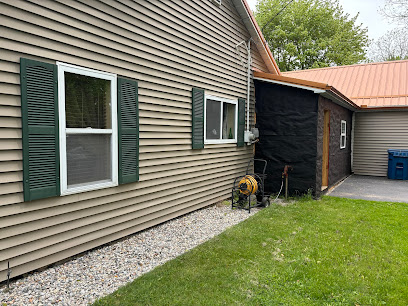
Flint Odyssey House Inc Residential/Outpatient Program
Flint, MI
- Detox
- Residential
- Outpatient
- MAT
Substance use treatment · Accepts clients on opioid medication but prescribed elsewhere · Cognitive behavioral therapy
Accepts: Cash or self-payment, Medicaid, Medicare
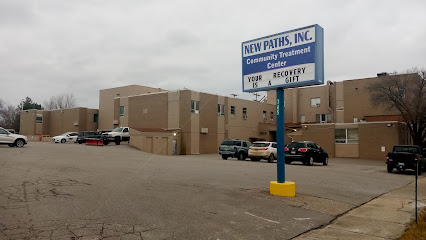
New Paths Inc
Flint, MI
- Residential
- PHP
- IOP
- Sober Living
Substance use treatment · Accepts clients on opioid medication but prescribed elsewhere · Cognitive behavioral therapy
Accepts: Cash or self-payment, Medicaid, Medicare

Flint Odyssey House Inc
Flint, MI
- PHP
- IOP
Substance use treatment · Accepts clients on opioid medication but prescribed elsewhere · Cognitive behavioral therapy
Accepts: Cash or self-payment, Medicaid, Medicare
Above the Water House
Flint, MI
- IOP
- Sober Living
Substance use treatment · Does not use medication for opioid addiction · Cognitive behavioral therapy
Accepts: Cash or self-payment