

At a Glance
Location
2000 North Old Hickory Trail, Desoto, TX 75115
Phone
972-298-7323 x276Website
http://www.hickorytrail.comPrimary Focus
Treatment Settings
Treatment Approaches
Special Programs
About Hickory Trail Hospital
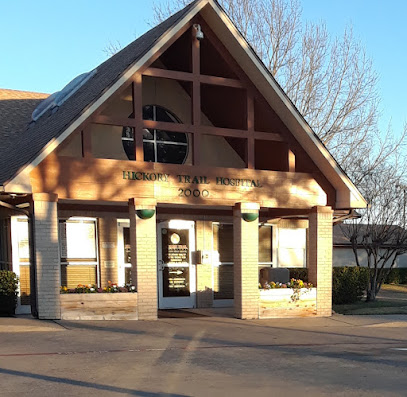
Hickory Trail Hospital is a behavioral health hospital in DeSoto, Texas, offering a full continuum of addiction treatment and psychiatric care for adults and seniors. From inpatient programs to outpatient and telehealth options, the facility supports people navigating chemical dependency, alcohol abuse, and opiate addiction alongside co-occurring mental health conditions.
Hickory Trail Hospital sits at 2000 Old Hickory Trail in DeSoto, Texas — part of Dallas County — and operates as a dedicated behavioral health hospital open 24 hours a day. The facility treats both psychiatric conditions and substance use disorders, including alcohol abuse, opiate addiction, and chemical dependency, making it a resource for individuals whose recovery needs extend beyond a single diagnosis. Its structure as a hospital-level program means clinical oversight is woven into every level of care rather than added as an afterthought.
The center offers a broad continuum of care across five distinct levels: inpatient, Partial Hospitalization Program (PHP), Intensive Outpatient Program (IOP), standard outpatient, and telehealth. Branches Dallas, a service of Hickory Trail Hospital, delivers IOP specifically for adults. This stepped-care model allows people to move through treatment at a pace that matches their clinical needs — starting at a more intensive level and transitioning toward outpatient or telehealth as recovery takes hold.
Clinically, Hickory Trail Hospital draws on individual therapy, group therapy, family therapy, medication management, and the 12-step model. Family therapy is a formal part of the program, which matters for people building a durable recovery network at home. The 12-step framework connects residents to a wider recovery community that extends well beyond the facility's walls, supporting the kind of long-term peer accountability that aftercare depends on.
The hospital serves two distinct populations — adults and seniors — treating them in separate closed inpatient units. That separation is a deliberate clinical and logistical choice, not an incidental detail. For families evaluating treatment options in the Dallas area, Hickory Trail's ability to address co-occurring conditions like depression, bipolar disorder, and schizophrenia alongside substance use disorders means complex cases don't have to be triaged between separate facilities.
A Full Continuum of Addiction Treatment and Recovery Care
One of the defining features of Hickory Trail Hospital is its range of program levels under one roof. Inpatient care sits at the most intensive end, followed by Partial Hospitalization Program (PHP), Intensive Outpatient Program (IOP), standard outpatient services, and telehealth. For someone early in recovery — or returning after a relapse — having access to that full continuum means the clinical team can match the level of care to where a person actually is, rather than defaulting to a one-size approach.
Transitions between levels matter as much as any individual program. Moving from inpatient to PHP, or from IOP to standard outpatient, is where many recovery plans either hold or fracture. Hickory Trail's structure is built to support those transitions within the same system, which reduces the friction of transferring between unconnected providers at a vulnerable point in the process.
Treating Co-Occurring Conditions Alongside Substance Use Disorders
Hickory Trail Hospital is a behavioral health hospital first, which means it is equipped to address mental health conditions — including depression, bipolar disorder, and schizophrenia — at the same time as alcohol abuse, opiate addiction, and chemical dependency. For many people seeking longer-term recovery, untreated co-occurring conditions are the piece that previous treatment episodes missed. A facility credentialed and staffed as a behavioral health hospital is structurally different from a standalone residential rehab in its capacity to manage that clinical complexity.
The therapeutic methods confirmed at the facility — individual therapy, group therapy, family therapy, medication management, and the 12-step model — reflect a program that attends to both the psychological and social dimensions of recovery. Medication management in particular signals clinical oversight that goes beyond talk therapy alone, which is relevant for anyone whose recovery intersects with a psychiatric diagnosis.
Family Therapy and the 12-Step Community in Long-Term Recovery
Recovery doesn't happen in isolation, and Hickory Trail Hospital's program reflects that. Family therapy is a confirmed part of the clinical model — not an optional add-on — which means the people who will be part of a client's life after discharge are brought into the process during treatment. That matters for families who want to understand how to support someone in sustained sobriety rather than simply waiting for a discharge date.
The 12-step model, also integrated into the program, links clients to a recovery community that extends well beyond the facility. For people thinking about what aftercare and ongoing peer support will look like, that connection to 12-step networks is a concrete bridge between structured treatment and community-based recovery maintenance.
Who Hickory Trail Hospital Serves
Hickory Trail Hospital serves adults and seniors, with inpatient units for each population kept separate — a deliberate clinical decision that acknowledges the different needs those groups bring to treatment. Seniors navigating addiction and co-occurring psychiatric conditions often require a different clinical environment than younger adults, and the hospital's structure accounts for that rather than treating age as an incidental variable.
The facility is located in DeSoto, Texas, within Dallas County, and is open 24 hours a day. For families in the Dallas area evaluating substance abuse treatment and residential treatment options for a loved one with a complex clinical picture, Hickory Trail's hospital-level behavioral health setting offers a level of clinical infrastructure that community-based rehab programs may not be able to match.
Why Choose Hickory Trail Hospital
- Adults and seniors are treated in separate closed inpatient units — a structural distinction that shapes the clinical environment for each group
- Five levels of care (inpatient through telehealth) allow the treatment plan to evolve as recovery progresses, avoiding abrupt discharge into unstructured settings
- Branches Dallas, the hospital's dedicated IOP service, gives adults a named, defined program rather than a generic outpatient slot
- Family therapy is a confirmed part of the clinical model, supporting the home environment that long-term recovery relies on
- The 12-step model is integrated alongside medication management and individual therapy, connecting clients to a broader recovery community from day one
Frequently Asked Questions
What levels of care does Hickory Trail Hospital offer for addiction treatment?
Hickory Trail Hospital offers five levels of care: inpatient, Partial Hospitalization Program (PHP), Intensive Outpatient Program (IOP), standard outpatient, and telehealth. This continuum allows individuals to step down through levels of intensity as their recovery progresses, rather than transitioning abruptly from intensive care to no structured support.
Does Hickory Trail Hospital treat co-occurring mental health conditions alongside substance use?
Yes. As a behavioral health hospital, Hickory Trail treats conditions including depression, bipolar disorder, and schizophrenia alongside alcohol abuse, opiate addiction, and chemical dependency. This integrated approach is particularly relevant for people whose substance use is connected to an underlying or concurrent psychiatric condition.
What is Branches Dallas and how does it relate to Hickory Trail Hospital?
Branches Dallas is a service of Hickory Trail Hospital that provides Intensive Outpatient Program (IOP) treatment for adults age 18 and older. It functions as the hospital's dedicated IOP offering, giving individuals a structured step-down option after more intensive inpatient or PHP-level care.
Does Hickory Trail Hospital use the 12-step model in its programs?
Yes, the 12-step model is one of the confirmed therapeutic approaches at Hickory Trail Hospital. It is used alongside individual therapy, group therapy, family therapy, and medication management as part of the facility's clinical framework.
Is family therapy part of the treatment program at Hickory Trail Hospital?
Family therapy is a confirmed component of Hickory Trail Hospital's therapeutic approach. Involving family members in treatment can strengthen the support system that sustains recovery after a person leaves the structured program environment.
Does Hickory Trail Hospital serve seniors as well as adults?
Yes. Hickory Trail Hospital serves both adults and seniors. In the inpatient setting, each population is treated in separate closed units, reflecting the clinical differences between these groups and the distinct environments that support their recovery.
What hours is Hickory Trail Hospital open?
Hickory Trail Hospital is open 24 hours a day. For individuals or families navigating a crisis or seeking to start the admission process, the facility can be reached at (972) 298-7323.
Does Hickory Trail Hospital offer telehealth for addiction treatment and recovery support?
Telehealth is a confirmed level of care at Hickory Trail Hospital. This option can be particularly relevant for individuals who have completed more intensive inpatient or PHP programming and are transitioning to less frequent, remote-based clinical contact as part of their ongoing outpatient care.
Where is Hickory Trail Hospital located?
Hickory Trail Hospital is located at 2000 Old Hickory Trail in DeSoto, Texas, 75115, within Dallas County. The facility's phone number is (972) 298-7323.
What therapeutic methods are used at Hickory Trail Hospital?
The confirmed therapeutic methods at Hickory Trail Hospital include individual therapy, group therapy, family therapy, medication management, and the 12-step model. These approaches address both the psychological dimensions of addiction and the social support structures that long-term recovery depends on.
Nearby Treatment Centers

Dallas Behavioral Healthcare Hospital
Desoto, TX
- Detox
- MAT
Substance use treatment · Cognitive behavioral therapy · Substance abuse counseling
Accepts: Cash or self-payment, Medicaid, Medicare
Breakthru at Crescent Medical
Lancaster, TX
- Detox
- MAT
Substance use treatment · Smoking not permitted · Hospital inpatient
Accepts: Cash or self-payment, Medicaid, Medicare
Crossroads Recovery Center
Dallas, TX
- Outpatient
- MAT
Substance use treatment · All Clients in Opioid Treatment Program · SAMHSA-certified Opioid Treatment Program
Accepts: Cash or self-payment, Sliding fee scale

Homeward Bound Inc Dallas Residential Treatment Center
Dallas, TX
- Detox
- Residential
- MAT
Substance use treatment · Accepts clients on opioid medication but prescribed elsewhere · Cognitive behavioral therapy
Accepts: Cash or self-payment, Medicaid, State-financed health insurance plan other than Medicaid

Department of Veteran Affairs Hospital
Dallas, TX
- Detox
- Residential
- IOP
- MAT
Substance use treatment · SAMHSA-certified Opioid Treatment Program · Cognitive behavioral therapy
Accepts: Cash or self-payment, Private health insurance, Military insurance
Dallas County MHMR Center DBA Dallas Metrocare Services Lancaste
Dallas, TX
- IOP
Substance use treatment · Does not use medication for opioid addiction · Cognitive behavioral therapy
Accepts: Cash or self-payment, Medicaid, State-financed health insurance plan other than Medicaid