

At a Glance
Primary Focus
Treatment Settings
Treatment Approaches
Special Programs
About Grand Lake Mental Health Center
Grand Lake Mental Health Center — now operating as GRAND Mental Health — provides outpatient and intensive outpatient substance use treatment in Jay, Oklahoma. CARF-accredited and serving a wide range of populations, the center uses Cognitive Behavioral Therapy to address addiction alongside co-occurring conditions like trauma and PTSD, accepting Medicaid, Medicare, TRICARE, and private insurance.
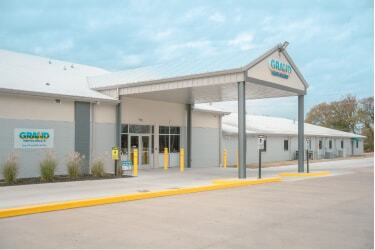
Grand Lake Mental Health Center, now rebranded as GRAND Mental Health, is a CARF-accredited substance use treatment facility located at 1015 West Washbourne Street in Jay, Oklahoma. Operating within Delaware County, the center focuses on outpatient recovery services that meet people where they are in their lives — without requiring a residential stay — and treats co-occurring disorders alongside substance use, including trauma and PTSD. The facility is part of a broader Oklahoma behavioral health network that has continued to grow its community presence.
The center offers two distinct levels of outpatient care: a standard Outpatient Program and an Intensive Outpatient Program (IOP). The IOP is structured for individuals who need more frequent clinical contact than weekly sessions but do not require residential treatment — making it a practical bridge for people transitioning out of higher levels of care or those managing recovery while maintaining work, family, or school responsibilities. Both tracks are designed to support sustained recovery rather than short-term stabilization alone.
Clinically, Grand Lake Mental Health Center incorporates Cognitive Behavioral Therapy (CBT) as a core therapeutic method. CBT equips people in recovery with concrete tools to identify and reshape the thought patterns that drive substance use, and it has particular relevance for the center's focus on trauma and dual diagnosis — two areas where addiction and mental health intersect most directly. The program addresses co-occurring disorders as part of treatment, not as a secondary concern.
The center serves an unusually broad population, including adolescents, young adults, veterans, pregnant women, seniors, men, women, individuals with HIV/AIDS, those who are deaf or hard of hearing, and court-ordered participants. Payment options include Medicaid, Medicare, TRICARE, private insurance, state insurance, and self-pay, removing common financial barriers to entering an outpatient program. Office hours run Monday through Friday, 8 a.m. to 5 p.m.
Outpatient and IOP Substance Abuse Treatment in Jay, Oklahoma
Grand Lake Mental Health Center — now GRAND Mental Health — offers two levels of outpatient care for people pursuing recovery from substance use disorders in Delaware County, Oklahoma. The standard Outpatient Program provides flexible, ongoing clinical support for individuals who are stable in their recovery and managing daily responsibilities. The Intensive Outpatient Program (IOP) steps that up, providing a more structured treatment schedule for people who need regular therapeutic contact without entering a residential program.
Both programs are built around Cognitive Behavioral Therapy, a structured, skills-based approach that helps people in recovery recognize and change the thinking patterns that contribute to substance use. For those managing co-occurring conditions alongside addiction — including trauma and PTSD — this dual focus makes the IOP and outpatient tracks relevant across multiple stages of the recovery journey, from early stabilization through longer-term aftercare.
Dual Diagnosis and Trauma-Informed Addiction Treatment
One of the defining features of the center's substance use treatment is its recognized focus on co-occurring disorders and dual diagnosis. Many people entering recovery carry histories of trauma or PTSD that interact directly with substance use — and treating only one without the other limits long-term outcomes. Grand Lake Mental Health Center addresses both within its outpatient framework, using CBT as the clinical backbone for integrated care.
This dual diagnosis approach is relevant not just for adults but across the full range of populations the center serves — from adolescents navigating early substance use alongside developmental stress, to veterans managing trauma alongside addiction, to seniors whose mental health and substance use challenges may have gone unaddressed for years. The breadth of populations served reflects a program designed to meet people across many different life circumstances.
Who Grand Lake Mental Health Center Serves
Few outpatient recovery programs in northeastern Oklahoma serve as wide a range of individuals as Grand Lake Mental Health Center. The facility accepts adolescents, young adults ages 18 to 25, adults of all genders, seniors, veterans, pregnant women, individuals with HIV/AIDS, those who are deaf or hard of hearing, and participants referred through the court system. That breadth matters for families — it means that multiple members of the same household, at different life stages, may be able to access care through the same provider.
Payment access is equally broad. The center accepts Medicaid, Medicare, TRICARE, private insurance, state insurance, and self-pay, which together cover the majority of insurance situations that outpatient clients bring to the door. TRICARE coverage is particularly notable for military families in the region seeking substance abuse treatment through a community-based outpatient program.
CARF Accreditation and the GRAND Mental Health Network
Grand Lake Mental Health Center holds accreditation from CARF International, an independent, nonprofit accreditor of health and human services providers. CARF accreditation signals that a facility has met rigorous standards for quality, accountability, and person-centered care — and it is a credential that families evaluating addiction treatment centers can use as a baseline measure of program integrity.
The center now operates under the GRAND Mental Health name, reflecting its place within a larger Oklahoma behavioral health organization. For individuals and families seeking a recovery center with institutional roots in the community — not a standalone clinic — that broader network context is part of what distinguishes the Jay location from other outpatient options in the region.
Why Choose Grand Lake Mental Health Center
- CARF-accredited outpatient and IOP programs designed for sustained, community-based recovery — not just short-term stabilization
- Dual diagnosis treatment that addresses trauma and PTSD alongside substance use in the same program
- Serves one of the widest population ranges of any outpatient center in the area, including veterans, adolescents, pregnant women, seniors, and court-ordered individuals
- Accepts TRICARE, making it a direct option for active-duty military families and veterans seeking substance abuse treatment
- Part of the broader GRAND Mental Health behavioral health network in Oklahoma, reflecting an institutional commitment to community-level recovery support
Frequently Asked Questions
What levels of care does Grand Lake Mental Health Center offer for addiction treatment?
Grand Lake Mental Health Center offers two outpatient levels of care: a standard Outpatient Program and an Intensive Outpatient Program (IOP). The IOP provides more frequent clinical contact for individuals who need structured support without a residential stay. Both tracks are available for adults and adolescents dealing with substance use disorders, including those with co-occurring mental health conditions.
Does Grand Lake Mental Health Center treat co-occurring mental health conditions alongside addiction?
Yes. The center is equipped to treat co-occurring disorders and dual diagnosis, with a specific focus on trauma and PTSD alongside substance use. Cognitive Behavioral Therapy (CBT) is the primary therapeutic method used to address both substance use and underlying mental health conditions within the same outpatient program.
What therapy approaches are used in the outpatient and IOP programs?
Cognitive Behavioral Therapy (CBT) is the confirmed therapeutic method used at Grand Lake Mental Health Center. CBT is a structured, skills-based approach that helps individuals in recovery identify and change thought patterns connected to substance use. It is particularly effective for people managing trauma or dual diagnosis alongside addiction.
Who is eligible to receive substance abuse treatment at Grand Lake Mental Health Center?
The center serves a broad range of populations, including adolescents, young adults (18–25), men, women, veterans, pregnant women, seniors, individuals with HIV/AIDS, those who are deaf or hard of hearing, and court-ordered participants. This wide eligibility makes the center relevant for families with members at different life stages seeking outpatient recovery support.
Does Grand Lake Mental Health Center accept Medicaid or Medicare for addiction treatment?
Yes. The center accepts both Medicaid and Medicare, as well as private insurance, TRICARE, state insurance, and self-pay. This range of accepted payment methods removes many of the financial barriers that can delay people from entering an outpatient substance abuse treatment program.
Is Grand Lake Mental Health Center a good option for veterans seeking addiction treatment?
Veterans are among the populations specifically served at Grand Lake Mental Health Center. The center accepts TRICARE, the health insurance program for military service members and their families, making it a direct-access outpatient option for veterans pursuing substance abuse treatment in northeastern Oklahoma. The program's dual diagnosis focus is also relevant for veterans managing trauma or PTSD alongside addiction.
Is Grand Lake Mental Health Center accredited?
Yes. Grand Lake Mental Health Center holds CARF International accreditation, which is an independent quality standard for health and human services providers. CARF accreditation is one indicator families can use when evaluating whether an outpatient rehab or addiction treatment center meets recognized standards for care quality and accountability.
What is the difference between Grand Lake Mental Health Center and GRAND Mental Health?
Grand Lake Mental Health Center is the same organization now operating under the name GRAND Mental Health, following a rebrand announced in 2024. The Jay, Oklahoma location at 1015 West Washbourne Street continues to provide outpatient substance use treatment and IOP services as part of the broader GRAND Mental Health behavioral health network in Oklahoma.
What are the hours of operation for the outpatient program in Jay, Oklahoma?
The center is open Monday through Friday from 8:00 a.m. to 5:00 p.m. Individuals interested in starting an outpatient program or IOP can reach the center by phone at (844) 458-2100 or by email at [email protected] during those hours.
Can adolescents receive addiction treatment at Grand Lake Mental Health Center?
Yes. Adolescents are among the confirmed populations served at Grand Lake Mental Health Center. The outpatient and IOP programs are available to younger individuals dealing with substance use disorders, including those with co-occurring conditions such as trauma or PTSD. Families should contact the center directly to discuss appropriate program placement for adolescent clients.
Nearby Treatment Centers
Pushmataha Counseling Services Inc
Pryor, OK
- IOP
Substance use treatment · Accepts clients on opioid medication but prescribed elsewhere · Cognitive behavioral therapy
Accepts: Cash or self-payment, Medicaid
Rogers County Drug Abuse Prog Inc
Claremore, OK
- IOP
Substance use treatment · Does not treat opioid addiction · Cognitive behavioral therapy
Accepts: Medicaid, Sliding fee scale, Payment assistance

Human Skills and Resources Inc
Claremore, OK
- Detox
- IOP
- MAT
Substance use treatment · Cognitive behavioral therapy · Substance abuse counseling
Accepts: Cash or self-payment, Medicaid, Private health insurance
Rose Rock Recovery Center
Vinita, OK
- Residential
Substance use treatment · Does not use medication for opioid addiction · Cognitive behavioral therapy
Northeastern Oklahoma Council on Alcoholism Inc
Jay, OK
- Residential
- Sober Living
Substance use treatment · Accepts clients on opioid medication but prescribed elsewhere · Cognitive behavioral therapy
Accepts: Cash or self-payment, Medicaid, Active duty military
Grand Lake Mental Health Center Inc
Kansas, OK
- Detox
- IOP
- MAT
Substance use treatment · Cognitive behavioral therapy · Substance abuse counseling
Accepts: Cash or self-payment, Medicaid, Medicare