

 1 / 3
1 / 3At a Glance
Location
274 South Orange Avenue, Newark, NJ 7103
Phone
973-412-2056Primary Focus
Treatment Settings
Treatment Approaches
Special Programs
About Family Service Bureau of Newark Gateway to Freedom Addiction Program
Family Service Bureau of Newark offers outpatient and intensive outpatient substance abuse treatment in Newark, NJ, with specialized programming for veterans, pregnant women, seniors, and court-ordered individuals. The program uses Cognitive Behavioral Therapy to address addiction alongside co-occurring disorders and trauma, making it a recovery-focused option for Essex County residents navigating longer-term treatment.
Family Service Bureau of Newark is a community-rooted substance use treatment center located at 274 South Orange Avenue in Newark, New Jersey. Operating within Essex County, the center provides structured outpatient addiction treatment designed for individuals who are committed to sustaining recovery beyond an initial crisis — people looking for ongoing support, clinical structure, and a treatment relationship that fits around the responsibilities of daily life.
The center offers two distinct levels of outpatient care: a standard Outpatient Program and an Intensive Outpatient Program (IOP). The IOP is particularly relevant for individuals who need more frequent clinical contact than a traditional outpatient schedule provides — a common bridge for those stepping down from residential treatment or managing co-occurring mental health conditions alongside substance use. Both tracks fall under the umbrella of outpatient substance abuse treatment, giving clients flexibility while maintaining consistent therapeutic engagement.
Cognitive Behavioral Therapy (CBT) anchors the clinical work at Family Service Bureau of Newark. CBT is a structured, skills-focused approach that helps clients identify thought patterns driving addictive behavior and develop practical tools for managing triggers, cravings, and high-risk situations. The center also addresses trauma and PTSD as part of its treatment scope, along with co-occurring disorders and dual diagnosis — recognizing that addiction rarely exists in isolation from other mental health challenges.
Family Service Bureau of Newark serves a notably broad range of populations: veterans, pregnant women, seniors and older adults, men, women, individuals living with HIV/AIDS, and those referred through the court system. Payment access is equally wide, with the center accepting Medicaid, private insurance, state insurance, self-pay, and a sliding scale fee structure. The center is open Monday through Friday, 9 a.m. to 5 p.m. For those in the Newark area building a foundation in long-term recovery, the Bureau's combination of clinical depth, population-specific programming, and financial accessibility sets it apart as a serious outpatient recovery partner.
Outpatient & IOP: Recovery Programs That Work Around Your Life
Family Service Bureau of Newark structures its addiction treatment around two outpatient levels of care: a standard Outpatient Program and an Intensive Outpatient Program (IOP). For individuals in sustained recovery who need regular clinical contact without a residential stay, these tracks offer meaningful therapeutic engagement while allowing clients to remain in their communities, keep jobs, and maintain family responsibilities.
The IOP is especially suited to those who are stepping down from a higher level of care or whose co-occurring conditions require more frequent support. Both programs are available Monday through Friday during daytime hours, giving clients a consistent recovery routine built into the workweek. For Newark-area residents evaluating long-term outpatient substance abuse treatment, the Bureau's dual-track structure means care can be matched to where someone actually is in their recovery — not forced into a one-size framework.
Addressing Trauma, Co-Occurring Disorders, and Dual Diagnosis
Addiction and mental health rarely travel alone. Family Service Bureau of Newark treats trauma and PTSD alongside substance use disorders, and its programming formally encompasses co-occurring disorders and dual diagnosis — meaning clients dealing with depression, anxiety, PTSD, or other mental health conditions concurrent with addiction can receive integrated care rather than being referred elsewhere for one part of the picture.
Cognitive Behavioral Therapy (CBT) provides the clinical framework. CBT equips clients with concrete skills: recognizing the thought patterns that feed substance use, developing coping strategies for triggers, and building the behavioral habits that support long-term sobriety. For those in recovery who have found that earlier treatment didn't adequately address the mental health piece, the Bureau's dual diagnosis focus is a meaningful differentiator in the Newark treatment landscape.
Who Family Service Bureau of Newark Serves
The center's population focus is one of its most distinctive features. Family Service Bureau of Newark explicitly serves veterans, pregnant women, seniors and older adults, men, women, individuals with HIV/AIDS support needs, and people entering treatment through court referral. This breadth reflects a mission oriented toward the Newark community in its full diversity — not a narrowly defined demographic slice.
Court-ordered clients and veterans in particular often benefit from treatment centers experienced with their specific documentation, legal, and clinical needs. Pregnant women in outpatient treatment require providers attentive to their unique health circumstances. The Bureau's confirmed experience across all these groups means that clients from these populations are not outliers in the program — they are a core part of the community the center is built to serve.
Payment Options and Access to Care
One of the persistent barriers to sustained addiction treatment is cost. Family Service Bureau of Newark accepts Medicaid, state insurance, private insurance, and self-pay, and also offers a sliding scale fee structure — meaning payment is adjusted based on a client's financial situation rather than set at a fixed rate that may be out of reach. This combination of payment options makes the center accessible to a wide cross-section of Newark residents regardless of insurance status.
For individuals and families weighing outpatient substance abuse treatment options in Essex County, the ability to use Medicaid or qualify for sliding scale pricing can make the difference between accessing care and going without. The Bureau's office at 274 South Orange Avenue can be reached at (973) 412-2056 during regular business hours, Monday through Friday, 9 a.m. to 5 p.m.
Why Choose Family Service Bureau of Newark Gateway to Freedom Addiction Program
- Intensive Outpatient Program (IOP) available alongside standard outpatient — two levels of care under one roof for flexible step-down or step-up treatment
- Explicitly serves veterans, pregnant women, seniors, and court-ordered clients — population-specific programming uncommon in general outpatient settings
- Dual diagnosis and trauma/PTSD treatment integrated into substance abuse care, not siloed
- Broad financial access: Medicaid, state insurance, private insurance, self-pay, and sliding scale fees accepted
- CBT-grounded clinical approach targeting the thought patterns and behaviors that sustain addiction over the long term
Frequently Asked Questions
What levels of care does Family Service Bureau of Newark offer?
The center offers two outpatient levels of care: a standard Outpatient Program and an Intensive Outpatient Program (IOP). The IOP provides more frequent clinical contact and is often used as a step-down from residential treatment or for individuals managing co-occurring mental health conditions alongside substance use. Neither program requires an overnight stay.
Does Family Service Bureau of Newark treat co-occurring mental health conditions?
Yes. The center formally treats co-occurring disorders and dual diagnosis, meaning clients dealing with both a substance use disorder and a mental health condition — such as trauma or PTSD — can receive integrated treatment. Cognitive Behavioral Therapy (CBT) is the primary clinical method used across the program.
What is Cognitive Behavioral Therapy and how does it support recovery?
Cognitive Behavioral Therapy (CBT) is a structured, skills-based therapeutic approach that helps individuals identify and change the thought patterns and behaviors connected to substance use. In the context of addiction treatment, CBT builds practical coping tools for managing triggers and high-risk situations. It is the confirmed therapeutic method used at Family Service Bureau of Newark.
Does Family Service Bureau of Newark serve veterans?
Yes. Veterans are among the specific populations the center is confirmed to serve. The program also serves pregnant women, seniors and older adults, men, women, individuals with HIV/AIDS support needs, and court-ordered clients — reflecting a broad, community-oriented approach to addiction treatment in Newark.
What payment options are accepted at Family Service Bureau of Newark?
The center accepts Medicaid, private insurance, state insurance, and self-pay. A sliding scale fee structure is also available, meaning costs can be adjusted based on a client's income and financial circumstances. These options make the center accessible to a wide range of individuals regardless of their insurance status.
Is Family Service Bureau of Newark a good fit for someone in long-term outpatient recovery?
The center's structure — offering both standard outpatient and IOP levels of care alongside CBT, dual diagnosis treatment, and trauma-focused programming — makes it well suited to individuals committed to sustained, ongoing recovery rather than short-term stabilization. Its Monday through Friday schedule supports clients who are building recovery into the rhythms of everyday community life.
Can court-ordered individuals receive treatment at Family Service Bureau of Newark?
Yes. Court-ordered individuals are among the confirmed populations served by the center. The program is equipped to work with clients entering treatment through the legal system as part of its broader commitment to serving diverse populations across the Newark community.
What are the center's hours of operation?
Family Service Bureau of Newark is open Monday through Friday from 9:00 a.m. to 5:00 p.m. The center is located at 274 South Orange Avenue, 2nd Floor, Newark, NJ 07103, and can be reached by phone at (973) 412-2056.
Does the center offer trauma treatment as part of its addiction recovery programs?
Yes. Trauma and PTSD are confirmed conditions treated at Family Service Bureau of Newark. Because trauma and substance use disorders frequently co-occur, the center's ability to address both within its outpatient programs is a meaningful aspect of its clinical approach for clients whose addiction is linked to past traumatic experiences.
Nearby Treatment Centers

Restoration Center
Newark, NJ
- IOP
Substance use treatment · Does not use medication for opioid addiction · Accepts clients on opioid medication but prescribed elsewhere
Accepts: Cash or self-payment, Medicaid, Medicare
Health Resources and Referral Servs
Newark, NJ
- Outpatient
Substance use treatment · Accepts clients on opioid medication but prescribed elsewhere · Cognitive behavioral therapy
Accepts: Cash or self-payment, Private health insurance, Sliding fee scale
Bethel Counseling Services
Newark, NJ
- PHP
- IOP
- MAT
Substance use treatment · Cognitive behavioral therapy · Dialectical behavior therapy
Accepts: Cash or self-payment, Medicaid
East Orange Substance Abuse Trt Prog
East Orange, NJ
- IOP
- MAT
Substance use treatment · All Clients in Opioid Treatment Program · SAMHSA-certified Opioid Treatment Program
Accepts: Cash or self-payment, Medicaid, Sliding fee scale
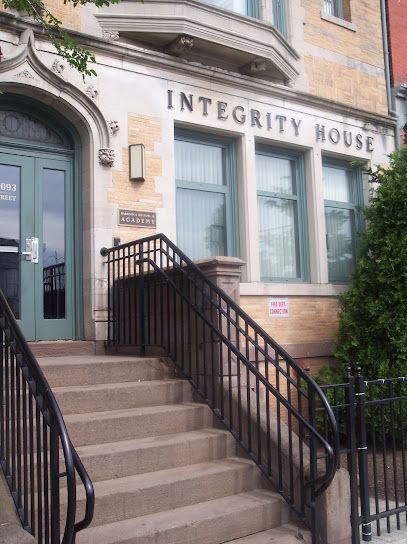
Integrity House Inc Intensive Outpatient
Newark, NJ
- PHP
- IOP
- MAT
Substance use treatment · Accepts clients on opioid medication but prescribed elsewhere · Cognitive behavioral therapy
Accepts: Medicaid, Medicare, State-financed health insurance plan other than Medicaid
Prime Healthcare Services St Michaels LLC
Newark, NJ
- IOP
Substance use treatment · Does not treat opioid addiction · Cognitive behavioral therapy
Accepts: Cash or self-payment, Medicaid, Medicare