

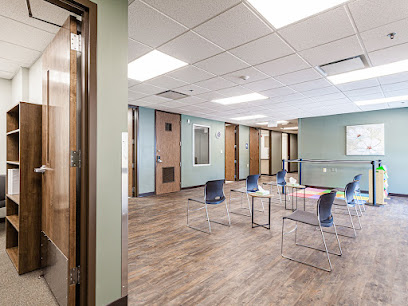
At a Glance
Location
2157 Greenbrier Street, Charleston, WV 25311
Phone
304-344-5924 x200Primary Focus
Treatment Settings
Treatment Approaches
Special Programs
About Charleston Comprehensive Trt Ctr
Charleston Comprehensive Treatment Center, located on Greenbrier Street in Charleston, WV, offers medical detox and outpatient programming for adults navigating opioid use and co-occurring disorders. As a CARF-accredited, OTP-certified recovery center, it serves a broad range of populations — including veterans, pregnant women, and young adults — with Cognitive Behavioral Therapy and flexible payment options including Medicaid, Medicare, and TRICARE.
Charleston Comprehensive Treatment Center sits at 2157 Greenbrier Street in Charleston, West Virginia, serving Kanawha County as a CARF-accredited substance use treatment facility. For individuals ready to move beyond a crisis moment and commit to structured, longer-term recovery, the center offers a clinical foundation built around opioid treatment — one of relatively few certified Opioid Treatment Programs (OTP) operating in the Charleston area. That certification, combined with CARF accreditation, signals a measurable standard of care that families and individuals can weigh when comparing recovery centers in West Virginia.
The center provides two primary levels of care: medical detox and an outpatient program. Medical detox allows individuals to begin their recovery safely under clinical supervision before transitioning to ongoing outpatient treatment — a continuum that supports more than just acute stabilization. The outpatient program is designed for people building recovery into their daily lives, making it a practical option for those who cannot step away from work, family, or community obligations for residential treatment.
Cognitive Behavioral Therapy (CBT) anchors the clinical approach at Charleston Comprehensive Treatment Center. CBT is a structured, skills-based method that helps individuals identify and reshape the thought patterns connected to substance use — a particularly relevant fit for the center's focus on co-occurring disorders and dual diagnosis. Treating both a substance use disorder and an underlying mental health condition at the same time, rather than sequentially, reflects a more complete view of what sustained recovery actually requires.
The center's doors are open to a notably wide range of people: men, women, young adults between 18 and 25, veterans, pregnant women, and individuals who are deaf or hard of hearing. TRICARE acceptance makes it a meaningful option for active-duty and veteran communities in the region. Payment flexibility extends further to Medicaid, Medicare, private insurance, and self-pay, reducing one of the most common barriers that keeps people from pursuing substance abuse treatment. For anyone in the Charleston area weighing their options, Charleston Comprehensive Treatment Center offers a clinically credentialed starting point with a scope that goes well beyond a single point of care.
Medical Detox and Outpatient Care in Charleston, WV
Charleston Comprehensive Treatment Center offers both medical detox and an outpatient program — a combination that supports individuals through the earliest stage of recovery and into the sustained work that follows. Medical detox under clinical oversight provides a structured transition off substances before the real work of long-term recovery begins. From there, the outpatient program allows people to maintain their daily responsibilities while continuing treatment.
As a certified Opioid Treatment Program, the center meets federal standards specifically designed for opioid use disorder treatment — a distinction not every outpatient program in West Virginia carries. For individuals and families researching recovery centers in the Charleston area, that OTP certification is a concrete differentiator worth understanding when comparing substance abuse treatment options.
CBT and Co-Occurring Disorder Treatment
Cognitive Behavioral Therapy is the confirmed therapeutic method at Charleston Comprehensive Treatment Center. CBT gives people in recovery practical tools to recognize and interrupt the thought cycles that drive substance use — skills that carry into life well beyond a formal treatment episode. That focus on skill-building aligns directly with the demands of outpatient recovery, where clients are applying what they learn in real time.
The center also treats co-occurring disorders and dual diagnosis conditions, recognizing that mental health and substance use challenges frequently intersect. Addressing both within the same treatment setting reduces the gap that can otherwise derail recovery when mental health needs go unmet during substance abuse treatment.
Who Charleston Comprehensive Treatment Center Serves
The center's listed populations reflect a deliberately broad commitment: men, women, young adults ages 18 to 25, veterans, pregnant women, and individuals who are deaf or hard of hearing. Each of these groups can face distinct barriers to accessing quality addiction treatment — and the center's structure is designed to meet several of those populations within a single program.
Veterans and active-duty individuals will find that TRICARE is accepted alongside Medicaid, Medicare, private insurance, and self-pay options. That range of accepted payment methods matters in a state where financial access to recovery services is a real and documented challenge. For families evaluating aftercare and long-term recovery support in Kanawha County, the center's accessibility across payer types is a practical consideration worth factoring into the decision.
Accreditation and Program Hours
CARF accreditation — awarded by the Commission on Accreditation of Rehabilitation Facilities — means Charleston Comprehensive Treatment Center has met a rigorous set of independent standards for substance use treatment. For individuals and families comparing recovery centers, accreditation provides a baseline assurance that the program operates according to established clinical and organizational benchmarks.
The center operates Monday through Friday from 5 to 11 AM and on Saturdays from 6 to 8:45 AM, with Sunday hours closed. That morning-focused schedule is worth noting for prospective clients planning around work or family commitments. Anyone exploring the outpatient program or medical detox services can reach the center directly at (304) 344-5924 or visit ctcprograms.com for location-specific information.
Why Choose Charleston Comprehensive Trt Ctr
- Certified Opioid Treatment Program (OTP) — one of a limited number of OTP-certified recovery centers operating in the Charleston, WV area
- CARF accreditation provides an independently verified quality standard families can rely on when evaluating addiction treatment options
- Dual medical detox and outpatient program levels of care support continuity from stabilization into longer-term recovery
- Specialized populations served include veterans (with TRICARE accepted), pregnant women, young adults, and individuals who are deaf or hard of hearing
- Co-occurring disorders and dual diagnosis are explicitly addressed, reflecting a treatment model that looks beyond substance use alone
Frequently Asked Questions
What levels of care does Charleston Comprehensive Treatment Center offer?
The center offers two confirmed levels of care: medical detox and an outpatient program. This combination allows individuals to move from clinical stabilization into ongoing outpatient recovery without needing to transfer to an entirely different facility. It supports a more connected recovery journey rather than a single-point intervention.
Is Charleston Comprehensive Treatment Center an Opioid Treatment Program?
Yes. The center holds an Opioid Treatment Program (OTP) certification, which is a federal designation for programs meeting specific standards for opioid use disorder treatment. This makes it one of the certified OTP providers operating in the Charleston, WV area — a meaningful distinction for individuals researching specialized recovery centers in Kanawha County.
Is the center accredited?
Charleston Comprehensive Treatment Center is accredited by CARF — the Commission on Accreditation of Rehabilitation Facilities. CARF accreditation is an independent, internationally recognized benchmark that addiction treatment programs must actively maintain. It gives individuals and families an objective measure when comparing substance abuse treatment providers.
Does the center treat co-occurring mental health and substance use disorders?
Yes. Co-occurring disorders and dual diagnosis are explicitly listed among the conditions treated at this facility. The center's use of Cognitive Behavioral Therapy supports treatment of both substance use and underlying mental health conditions within the same program, rather than addressing them separately.
What therapy approach is used in the outpatient program?
Cognitive Behavioral Therapy (CBT) is the confirmed therapeutic method used at Charleston Comprehensive Treatment Center. CBT is a structured, skills-based approach that helps individuals in recovery identify and change thought patterns connected to substance use — a practical fit for outpatient settings where clients are applying skills in daily life.
Does Charleston Comprehensive Treatment Center accept Medicaid or Medicare?
Yes. The center accepts both Medicaid and Medicare, along with private insurance, TRICARE, and self-pay or cash. That breadth of accepted payment methods helps reduce a common barrier to addiction treatment access in West Virginia. Veterans and active-duty individuals can use their TRICARE benefits at this location.
Which populations does the center specifically serve?
The center serves men, women, young adults ages 18 to 25, veterans, pregnant women, and individuals who are deaf or hard of hearing. Services are provided in English. This range of served populations makes it a more accessible recovery center option for diverse individuals and families in the Charleston, WV area.
What are the center's hours of operation?
Charleston Comprehensive Treatment Center operates Monday through Friday from 5 to 11 AM and on Saturdays from 6 to 8:45 AM. The center is closed on Sundays. The morning-focused schedule may be a practical fit for individuals managing outpatient recovery alongside daytime commitments.
Where is Charleston Comprehensive Treatment Center located?
The center is located at 2157 Greenbrier Street in Charleston, West Virginia, 25311 — in Kanawha County. It can be reached by phone at (304) 344-5924. Additional program details for this specific location are available at ctcprograms.com.
Is this a good option for veterans seeking addiction treatment in Charleston, WV?
Veterans are among the confirmed populations served at Charleston Comprehensive Treatment Center, and TRICARE is an accepted payment method. The center is also OTP-certified and CARF-accredited, meeting independent standards for substance use treatment. Veterans seeking an outpatient recovery program or medical detox in the Charleston area may find the center's combination of credentials and payment flexibility worth considering.
Nearby Treatment Centers

Charleston Area Medical Center Behavioral Health Services Unit
Charleston, WV
- Detox
- MAT
Substance use treatment · Accepts clients on opioid medication but prescribed elsewhere · Cognitive behavioral therapy
Accepts: Cash or self-payment, Medicaid, Medicare
Prestera Center for MH Services Inc Mattie V Lee Home
Charleston, WV
- Residential
- MAT
Substance use treatment · Cognitive behavioral therapy · Dialectical behavior therapy
Accepts: Medicaid, Medicare, Military families

Thomas Memorial Hospital Behavioral Health Services
Charleston, WV
- Detox
- IOP
- MAT
Substance use treatment · Accepts clients on opioid medication but prescribed elsewhere · Cognitive behavioral therapy
Accepts: Cash or self-payment, Medicaid, Medicare
Samaritan Inn
Charleston, WV
- Residential
- Outpatient
- Sober Living
Substance use treatment · Does not use medication for opioid addiction · Cognitive behavioral therapy
Accepts: Cash or self-payment

Highland Health Center (HHC)
Charleston, WV
- Detox
- MAT
Substance use treatment · Accepts clients on opioid medication but prescribed elsewhere · Cognitive behavioral therapy
Accepts: Cash or self-payment, Medicaid, State-financed health insurance plan other than Medicaid